
Condensing vs Non-Condensing Hot-Water Boilers: Return Temperature and System Fit
Condensing performance depends on the boiler and the water circuit operating together. Return temperature, load profile, controls, flue materials and condensate management determine system fit.
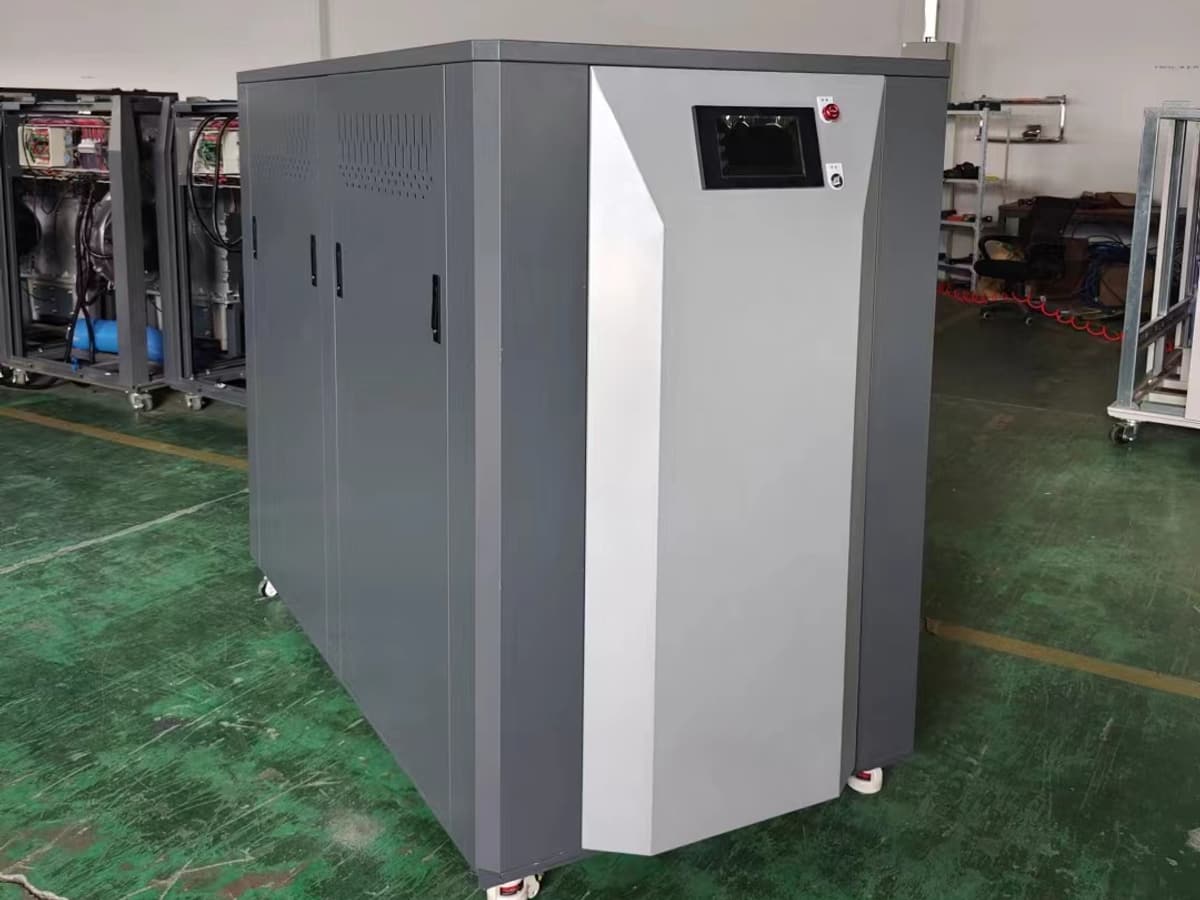
The central difference in a condensing vs non condensing boiler decision is whether the complete hot-water system can provide conditions that allow useful flue-gas condensation. A condensing label does not guarantee condensing operation. Return-water temperature, firing rate, heat-emitter selection, control sequence, flue route and condensate disposal all affect the result.
This guide focuses on that selection boundary. Hydraulic balancing, expansion capacity and pump duty are covered separately in JINHONG’s industrial hot-water circulation guide.
Understand where the additional heat comes from
A conventional non-condensing boiler transfers sensible heat while keeping flue-system conditions above the intended condensation range. A condensing boiler adds corrosion-resistant heat-transfer and drainage provisions so that, under suitable conditions, some water vapor in the flue gas condenses and releases latent heat.
The relevant dew point is not one universal number. Fuel composition, excess air, combustion condition and measurement location affect it. The equipment supplier’s performance data should therefore show the relationship among firing rate, supply temperature, return temperature and efficiency on a stated fuel and calculation basis.
Use return temperature and load profile together
Low return temperature increases the opportunity to cool flue gas below its dew point. Yet a building or process does not operate at one design condition all year. Outdoor reset, zone control, heat-emitter sizing, bypasses, mixing valves and simultaneous loads can change the return temperature and operating hours.
A US Department of Energy field study presents condensing-boiler performance as a function of return-water temperature rather than a single nameplate claim. Source: US DOE — In-Field Performance of Condensing Boilers. CIBSE similarly emphasizes low return temperature and careful sequencing in multiple-boiler systems. Source: CIBSE — heat-load control on multiple boilers.
Use an illustrative heat-balance check, not a promised saving
Assume a water circuit delivers 1,000 kW and use a simplified water specific heat of 4.18 kJ/kg·K. With an 80°C supply and 60°C return, ΔT is 20 K and calculated mass flow is 1,000 ÷ (4.18 × 20) = about 12.0 kg/s. With the same assumed duty and an 80/50°C circuit, ΔT is 30 K and flow is about 8.0 kg/s.
The second example offers a lower return temperature, but it does not prove a saving or determine pump size. Real loads, minimum flow, emitter output, control valves, pipe losses and the manufacturer’s operating envelope must be checked. It illustrates why replacing only the boiler can leave the return temperature unchanged.
Compare the complete equipment and installation scope
| Design item | Non-condensing route | Condensing route |
|---|---|---|
| Water temperatures | Selected for the application and boiler limits | Selected to create useful low-return-temperature hours where feasible |
| Flue system | Designed for the stated stack condition | Materials, slope and drainage must accommodate condensate |
| Condensate | Not a normal heat-exchanger output | Drain, treatment if required and disposal route must be defined |
| Controls | Maintain required heat and safe operation | Also preserve condensing opportunity without violating flow limits |
Local fuel, flue, water, drainage and environmental rules remain project-specific. Acidic condensate and low flue temperature can affect materials and chimney design; these interfaces must be approved rather than improvised on site.
Check part-load sequencing and legacy heat emitters
A selection study should test more than the peak winter or process duty. At part load, an oversized single boiler may cycle before the distribution system develops a useful temperature difference. Multiple units can increase staging flexibility, but only when sensors, minimum flow, lead-lag logic and isolation valves are coordinated.
Existing radiators, air-handling coils or process exchangers also need checking at the proposed lower water temperatures. Their delivered heat may fall as mean water temperature decreases. A condensing design therefore balances emitter capacity, pump energy, return temperature and control stability across representative operating points; it does not chase the lowest return temperature without confirming the load.
Choose between JINHONG hot-water boiler routes
The YDLB fully premixed condensing gas boiler is intended for a condensing route where load, return temperature and gas conditions fit. The CWNS gas/oil hot-water boiler is an atmospheric non-condensing route engineered around the actual water circuit. The Vietnam 2 × 1.4 MW CWNS project shows a confirmed building-heating application with automatic unit start, stop and rotation; it is project evidence, not a universal comparison result.
Review low-load operation with the turndown and short-cycling guide. Then send the heat-load profile, supply/return temperatures, fuel data, water volume, control concept and destination through the technical proposal form.
Frequently asked questions
Does a condensing boiler always operate in condensing mode?
No. Condensation depends strongly on return temperature, firing condition and system operation. A high return temperature can reduce or remove the condensing period.
Can a condensing boiler replace a conventional boiler without system changes?
Sometimes, but the existing emitters, temperatures, pumps, valves, flue and drain must be checked. A direct equipment swap does not guarantee the intended operating condition.
Is the lowest possible return temperature always best?
No. The system must still deliver the required heat and stay within the boiler’s approved flow and temperature limits. Selection is a whole-system engineering decision.
Technical references
Primary and official sources consulted for this guide. Source publication dates, jurisdictions and equipment contexts differ; examples are not JINHONG performance claims.