
Boiler Turndown, Short Cycling and Multiple-Boiler Sequencing
Why minimum stable output matters as much as peak capacity, and how to assess cycling, sequencing and storage without relying on a headline turndown ratio.
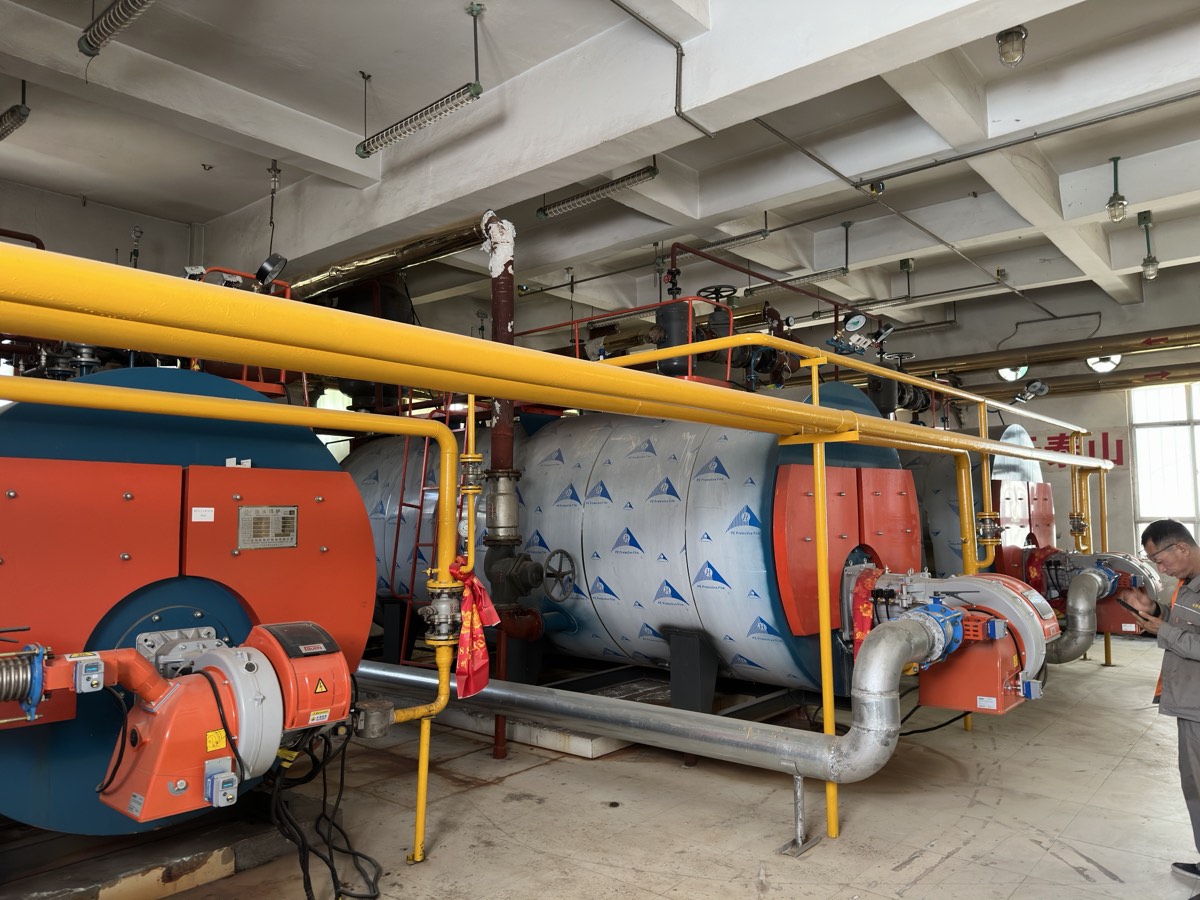
Peak boiler capacity answers one question: can the plant meet its largest demand? Boiler turndown answers another: how far can output reduce while operation remains controlled? A plant that meets its winter or production peak can still perform poorly during quiet shifts. Understanding the relationship between minimum output, real demand and control sequencing is therefore essential.
The objective is not to eliminate every start. It is to avoid unnecessary cycling while preserving safe combustion, dependable heat supply and the equipment’s approved operating envelope.
Read the turndown definition carefully
Burner turndown is commonly expressed as maximum firing input divided by minimum firing input. The DOE uses this definition in its energy-efficient burner guidance. It should not automatically be treated as the ratio between maximum and minimum useful boiler output, because efficiency and operating conditions can vary with load.
Ask a supplier what the stated ratio actually covers: fuel, boiler model, required emissions, furnace conditions and installed controls. Request minimum useful output as well as maximum output. A high ratio on a very large unit may still leave its minimum output above the site’s night load.
For an illustrative comparison only, a boiler with 5,000 kW maximum useful output and an assumed 5:1 output ratio has a 1,000 kW minimum. A 2,000 kW unit at the same assumed ratio has a 400 kW minimum. The ratios match; their ability to serve a 600 kW demand does not. These numbers are not product specifications.
Understand what the cycle contains
An operating cycle includes more than firing. Purging, standby and restart contribute to the energy balance. The DOE explains that fixed enclosure losses become proportionally more important at low output, while purge air carries heat away. It also identifies oversized capacity and changed process demand as reasons cycling can increase in its short-cycling guidance.
For an assessment, separate an ordinary demand shutdown from a safety trip. Record the controller’s reason for stopping rather than classifying every interruption as a capacity problem. Repeated protective trips need investigation by qualified personnel; extending timers or bypassing interlocks is not a cycling remedy.
Build a load picture before choosing a remedy
Prepare a trend that connects demand, boiler response and the production schedule. Include low-demand shifts and the transitions between batches. Useful records include:
- Steam flow or hot-water heat delivery, with measurement basis stated.
- Header pressure or supply and return temperatures.
- Firing command, operating hours, start count and shutdown reason.
- Which boilers and circulation pumps were enabled.
- Fuel consumption and changes in production or outdoor conditions.
Plotting these records together is more informative than a daily average. A smooth average can conceal repeated short peaks or hours below minimum output. This is an engineering screening approach: the result may justify further instrumentation rather than an immediate equipment purchase. Our boiler capacity guide explains the demand side of the assessment.
Keep an event record that can be cross-checked
Use the same clock for controller exports and production records. For each observed start or stop, attach the surrounding trend and retain the controller’s exact message. An unexplained gap should remain unknown until the record is checked.
| Record field | Evidence to retain |
|---|---|
| Event identity | Date, timestamp, boiler ID, start or stop, and source log. |
| Reason and duration | Exact controller message; recorded firing, purge and idle durations where available. |
| Demand and response | Measured steam flow or useful heat, measurement basis, header pressure and firing command. |
| Plant context | Active boilers, batch transition, shift and any recorded alarm. |
| Review outcome | Evidence reference, unresolved question and responsible reviewer. |
These records also support boiler maintenance and design-life review. Start counts alone do not establish remaining life or certify safe condition; inspection history and the actual thermal and pressure history remain relevant.
Sequence the plant, not just individual burners
Multiple-boiler sequencing coordinates which units run and how they share demand. Its value is different from simply rotating the lead boiler. A documented Fulton installation illustrates this distinction: sequencing controls boiler selection and firing extent, while the combined plant operating range differs from each individual unit’s range. This is an example of another manufacturer’s installation, not a JINHONG performance claim. See Fulton’s published system description.
For a new proposal, request an operating map showing which boiler combinations serve minimum, normal and peak demand. Ask what happens during rapid demand changes and when one unit is unavailable. A theoretical plant-wide turndown ratio is incomplete without the permitted staging transitions and the capacity actually available.
Do not assume the same loading strategy fits every boiler. Condensing hot-water systems also depend strongly on return-water conditions and distribution design; Cleaver-Brooks discusses the relationship between controls, return temperature and system energy in its system control-strategy overview. Compare actual equipment characteristics, pumping energy and availability requirements instead of using a universal instruction to load every boiler equally.
Screen hypothetical load combinations before control design
Continue the earlier illustrative output example: assume unit A can deliver 400–2,000 kW and unit B 1,000–5,000 kW of useful heat. All loads and ranges below are hypothetical, not product specifications. They refer to useful output, not burner fuel input.
| Assumed demand | Combination within assumed ranges | What the comparison shows |
|---|---|---|
| Minimum: 600 kW | A alone | Below B’s assumed minimum of 1,000 kW. |
| Normal: 1,800 kW | A alone, B alone, or A + B | Several combinations contain the load; efficiency is not established. |
| Peak: 6,000 kW | A + B | Combined range: 1,400–7,000 kW; neither unit alone meets this load. |
Being inside an arithmetic range does not confirm an acceptable operating arrangement. Engineering review still needs measured performance, permitted loading, response, emissions constraints and the consequence of losing either unit. Use the steam-demand assessment to establish actual loads and the efficiency comparison guide to keep performance boundaries consistent. The table provides no staging thresholds, timing settings or control instructions.
Consider storage only when the application supports it
In hot-water systems, a buffer tank can absorb a mismatch between heat-source output and a small active load. Required usable storage depends on the output imbalance, permitted temperature swing and desired operating behaviour. Caleffi explains these principles in its thermal-storage engineering journal.
A buffer tank is not a universal solution, and a hot-water tank cannot be substituted for a steam accumulator. Storage adds space, insulation, hydraulic and control requirements. Compare it with better demand coordination, an appropriate smaller boiler or a compatible burner upgrade before making a selection.
Practical assessment checklist
- Verify whether quoted turndown refers to fuel input, useful output or the complete plant.
- Document low-load periods, start counts and shutdown reasons.
- Check minimum stable operation under the actual fuel and emissions requirements.
- Review staging transitions, backup duty and distribution behaviour.
- Compare proposals against measured conditions rather than nominal efficiency alone.
- Retain all manufacturer-required purge and protective functions.
Frequently asked questions
Does a higher turndown ratio guarantee lower fuel consumption?
No. It can improve load matching, but the result depends on minimum output, combustion performance, demand and the wider system.
Should all boilers remain running at low fire?
Not automatically. The appropriate combination depends on measured performance, response requirements and permitted operating limits.
Can a control adjustment fix an oversized boiler?
It may improve operation within approved limits, but it cannot remove the physical minimum-output constraint. Hardware or system changes may still be necessary.
Send your load profile and existing equipment information to discuss a suitable arrangement. For hydraulic context, see hot-water circulation and expansion.
Technical references
Primary sources consulted for this guide. Source publication dates and equipment contexts differ; historical examples are not JINHONG performance claims.
- DOE Steam Tip Sheet 24: Upgrade Boilers with Energy-Efficient Burners
- DOE Steam Tip Sheet 16: Minimize Boiler Short Cycling Losses
- Fulton: Artisan Meats Boiler System Case Study
- Cleaver-Brooks: Total System Efficiency — Control Strategies and System Distribution
- Caleffi idronics 17: Thermal Storage in Hydronic Systems