
Biomass Chain-Grate Boiler Combustion Troubleshooting: Fuel Bed, Air Distribution and Unburned Carbon
Stable chain-grate combustion depends on the fuel bed, grate travel, staged air and draft working together. Diagnose the pattern before changing any one setting.
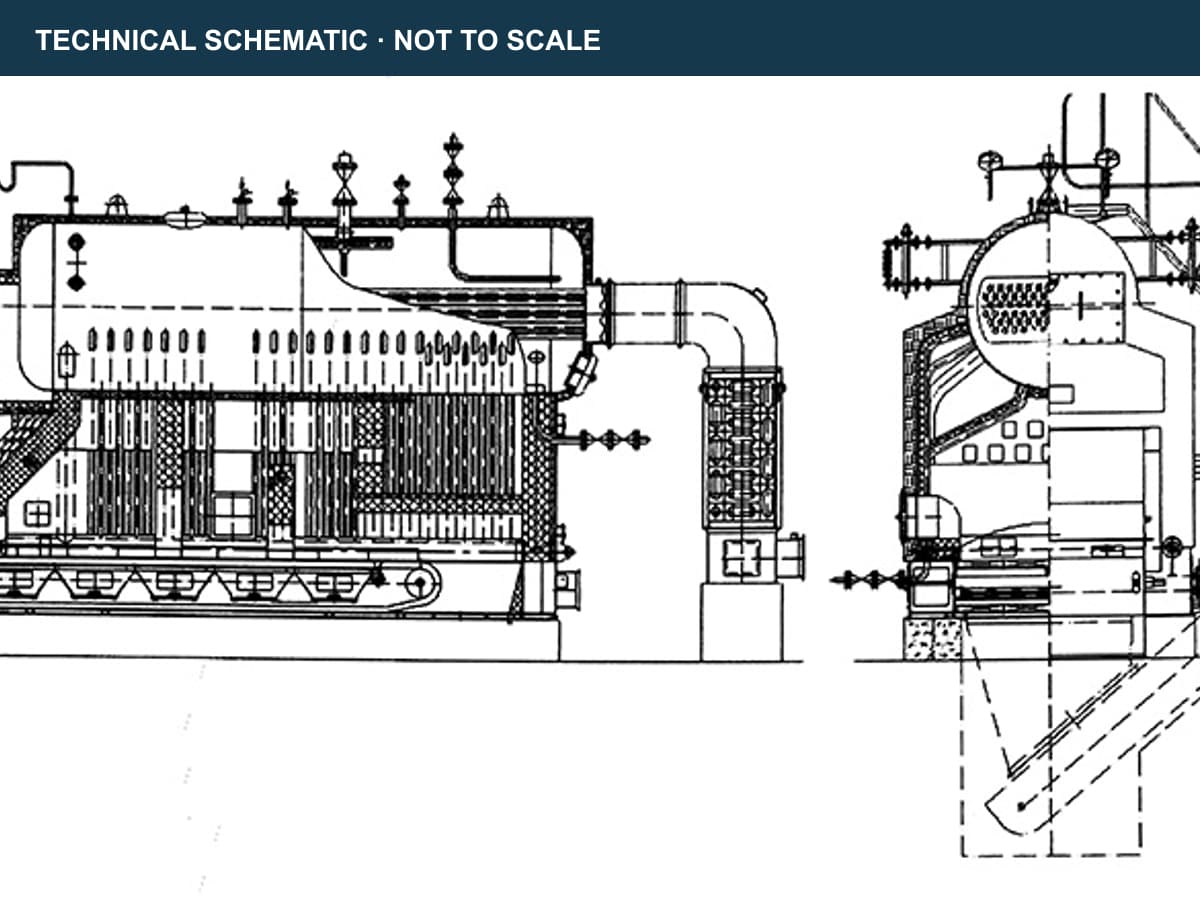
The first rule of biomass chain grate boiler troubleshooting is to treat the fuel bed, grate and air system as one combustion process. Unburned fuel in ash, an uneven bed or unstable steam output is not enough to justify a faster grate, more air or a different fuel. Record where the symptom occurs, under which load and with which fuel batch before changing an approved setting.
This guide addresses fuel-bed operation. It does not repeat the ash-chemistry diagnosis covered in JINHONG’s biomass slagging and fouling guide, and it is not a substitute for the boiler manufacturer’s operating instructions or local safety requirements.
Read the whole combustion pattern before adjusting it
A traveling grate moves fuel through overlapping stages: heating and drying, volatile release, char combustion and final burnout. The zones do not occupy fixed lengths because fuel moisture, particle size, bed depth, grate speed, load and air distribution all change the pattern. A useful inspection record therefore maps the bed from the feed end to the ash discharge and aligns observations with steam load, furnace draft and fuel data.
The US EPA description of wood-residue firing explains the roles of drying, volatile combustion and fixed-carbon burnout, and notes that operating conditions and fuel moisture influence incomplete combustion. Source: US EPA AP-42 Section 1.6 — Wood Residue Combustion in Boilers.
Separate fuel distribution from grate residence time
An overloaded section can coexist with a thin or bare section. Check whether the feeder spreads fuel across the working width, whether large pieces segregate, and whether side seals or damaged grate areas create preferential air paths. Bed depth should be evaluated against the approved design and the actual fuel, not copied from another boiler.
Consider a purely illustrative residence-time comparison. If the nominal grate travel time is 30 minutes and speed is increased by 25% while the travel distance stays unchanged, the nominal travel time becomes 30 ÷ 1.25 = 24 minutes. That does not predict burnout, but it shows why a speed change can reduce the available time for drying and char conversion. A slower grate can create a different problem if it produces an excessive bed or shifts combustion toward one zone.
Use primary air, secondary air and draft for different jobs
Primary air passes through the grate and fuel bed. Secondary air supports mixing and burnout above the bed. Induced draft maintains the intended furnace pressure and moves flue gas through the downstream equipment. Increasing all fans together is not a controlled diagnosis.
IEA Bioenergy describes modern automated biomass combustion as coordinated fuel-bed and staged-air control, including distribution of primary air to grate sections. Source: IEA Bioenergy Task 32 — Low Emission Biomass Combustion. The correct air split remains project-specific. Oxygen or carbon-monoxide readings should be interpreted with load, leakage, fuel condition and instrument location, as explained in the excess-air and oxygen-control guide.
Match common symptoms to evidence—not instant conclusions
| Observation | Possible contributors | Check before action |
|---|---|---|
| Unburned pieces at discharge | Short residence time, thick bed, wet or oversized fuel, poor under-grate distribution | Fuel sample, bed map, grate condition and air-zone trend |
| Bright channels or bare patches | Uneven feeding, air leakage or local grate damage | Distribution across width and approved inspection findings |
| High carryover of fine material | Excess local velocity, excessive fines or unstable feed | Fuel sizing, fan/damper condition and dust-collector loading |
| Steam output oscillation | Fuel surging, control interaction or changing fuel moisture | Time-aligned feeder, draft, pressure and fuel records |
Do not equate loss on ignition or visible black ash directly with a boiler-efficiency percentage. Sampling location, representativeness and laboratory method matter. Use an agreed mass and energy balance if a quantified loss is required.
Inspect the mechanical and flue-gas route safely
A combustion fault can originate outside the visible bed. Check feeder wear, grate movement, air-plenum cleanliness, damper position feedback, fan condition and pressure drop through emission-control equipment using approved procedures. Never defeat a trip, open hot equipment or enter a hopper to obtain better evidence.
The US Department of Energy’s steam-system sourcebook treats the boiler, fans, controls and heat-recovery equipment as an integrated system rather than isolated components. Source: US DOE — Improving Steam System Performance.
Build a project-specific troubleshooting pack for JINHONG
Provide the boiler model, approved fuel range, representative fuel analysis, photographs of the bed and ash, load history, grate and fan trends, alarms and recent maintenance. JINHONG’s DZL chain-grate boiler and SZL water-tube boiler serve different capacity routes, so settings are not transferable by product name alone. The 6 TPH Uzbekistan project also shows why the dust collector, wet-treatment tower, induced-draft fan, ducting and chimney belong inside the review. Submit the evidence through the technical proposal form.
Frequently asked questions
Does more excess air always reduce unburned carbon?
No. Air must reach the correct zone and mix with released gases without creating excessive cooling, carryover or heat loss. Review staged air and draft as a system.
Can grate speed be set from boiler load alone?
No. Load is one input. Fuel moisture, size, bed depth, distribution and burnout condition also affect the suitable operating window.
Does black ash prove that the fuel is unsuitable?
Not by itself. It may indicate incomplete burnout, but a representative sample, operating record and inspection are needed before assigning the cause to fuel, air, grate movement or equipment condition.
Technical references
Primary and official sources consulted for this guide. Source publication dates, jurisdictions and equipment contexts differ; examples are not JINHONG performance claims.