
Biomass Fuel Storage and Feeding System Design: Bridging, Metering and Fire Risk
A reliable biomass boiler needs a fuel route that preserves fuel condition, releases material predictably and meters it to the combustion system. Storage volume alone is not a complete design.
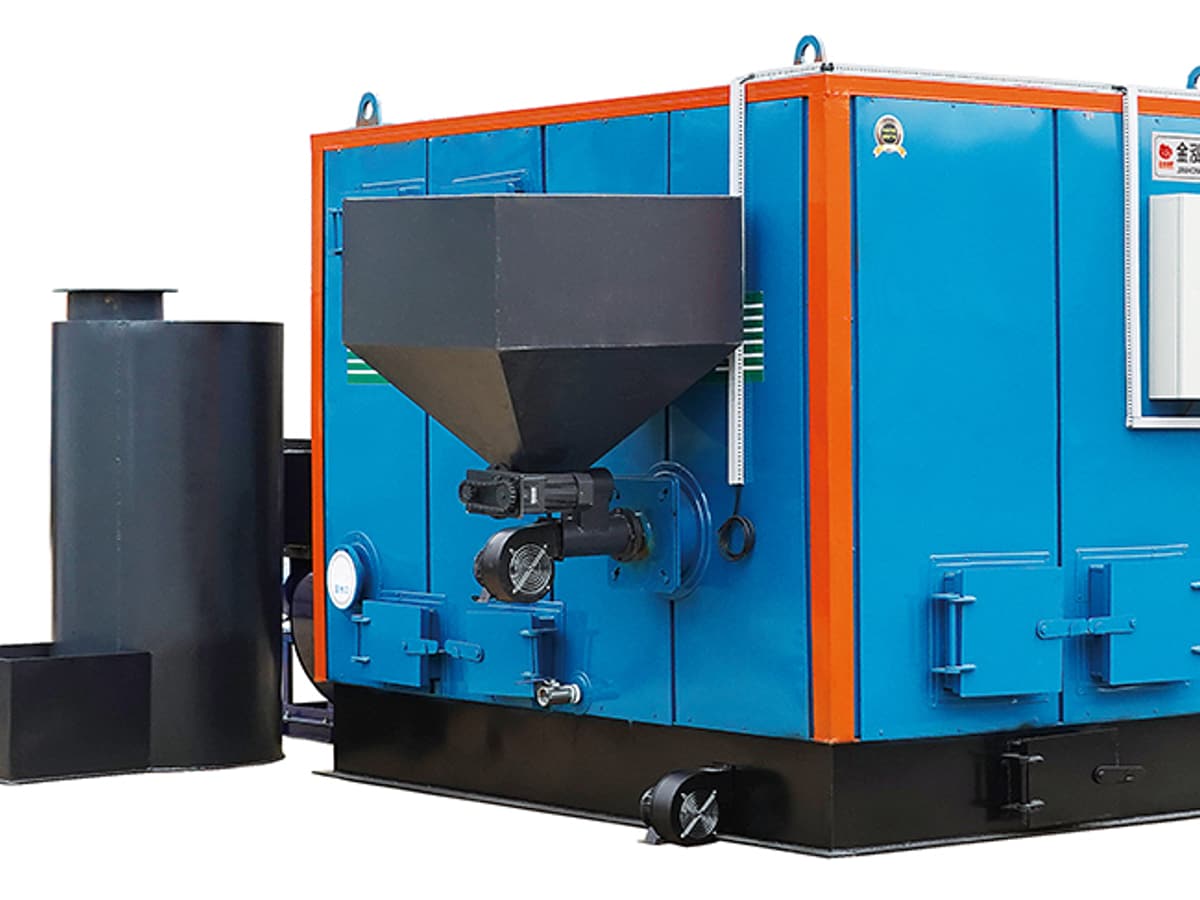
The practical conclusion is simple: design the biomass fuel feeding system from delivery to the furnace as one route. A large store cannot compensate for poor extraction, and a powerful screw cannot make an unsuitable fuel flow consistently. Fuel form, bulk density, moisture, fines, delivery method, reserve period and safe access must be confirmed before the hopper, conveyor and controls are fixed.
This guide covers storage and feeding rather than fuel chemistry. Use JINHONG’s biomass fuel evaluation guide to assess moisture, size, ash and calorific value before applying the system checks below.
Map every transfer point before selecting equipment
Start with a simple material-flow diagram: delivery vehicle, receiving point, long-term store, extraction device, transfer conveyor, day hopper, metering feeder and furnace inlet. Record the maximum and minimum expected fuel condition at each point. A material that moves easily during a dry acceptance trial may compact, absorb moisture or create fines after repeated handling.
Forest Research notes that woodfuel requires planned storage, delivery access and extraction because biomass has lower bulk energy density and does not behave like a continuously supplied gas. Its guidance also highlights augers, belts, pneumatic systems and other transfer methods as fuel- and site-dependent choices. Source: Forest Research — woodfuel storage and handling.
Control bridging, dead zones and inconsistent discharge
Bridging occurs when material forms a stable arch above an outlet. Ratholing leaves a central flow channel while fuel remains against the walls. Both conditions can create alternating starvation and surges even when the store is not empty. The remedy is not a universal hopper angle. Wall finish, outlet geometry, particle shape, moisture, compaction and the extraction device all matter.
| Fuel observation | Design question | Evidence to collect |
|---|---|---|
| Uniform pellets with limited fines | Can gravity and a metering screw provide controlled withdrawal? | Bulk density, fines after delivery and pellet durability |
| Wood chips with variable length | Could pieces interlock at an outlet or wrap around moving parts? | Representative size distribution and photographs |
| Light agricultural residue | Will low density or irregular shape change storage volume and feeder stability? | As-received density, moisture and trial-handling observations |
Inspection doors and clean-out points must be designed so that blockage investigation does not expose personnel to moving machinery, unstable material or a hazardous atmosphere. Do not use manual entry as the normal solution to poor flow.
Use reserve mass—not nominal volume—as the first sizing check
Consider an illustrative plant that assumes a fuel demand of 600 kg/h, 12 hours of reserve and 80% usable storage volume. Required reserve mass is 7,200 kg. If the assumed bulk density is 650 kg/m³ for pellets, the calculated gross space is about 13.8 m³. At an assumed 250 kg/m³ for chips, it is 36 m³. These figures are examples, not JINHONG equipment ratings: actual density, bridging margin, delivery lot size, fire separation and local rules can change the store substantially.
The comparison explains why the same boiler heat duty does not produce one standard biomass hopper design. A project also needs room for vehicle access, fuel inspection, drainage, ventilation and maintenance.
Meter fuel and combustion air as a coordinated control loop
The final feeder should deliver a controllable mass trend, not simply run whenever the boiler pressure changes. Drive speed, gate position, day-hopper level, grate movement, primary air, secondary air and induced draft interact. A surge of fuel followed by starvation can disturb the fuel bed and steam output even when the average daily quantity appears correct.
Define alarm and permissive logic for low level, feeder overload, loss of draft and other project-specific conditions during engineering. The exact sequence belongs to the approved control philosophy. JINHONG configures smaller pellet systems such as the ZFQ biomass steam generator and industrial chain-grate routes such as the DZL boiler and SZL boiler around different loads and fuel envelopes.
Treat dust, carbon monoxide, fire and access as design inputs
Bulk biomass storage can introduce combustible dust, self-heating, moving-equipment and confined-space risks. The UK Health and Safety Executive warns that enclosed wood-pellet stores can become oxygen-deficient and accumulate carbon monoxide; entry therefore requires a site-specific risk assessment and competent controls. Source: HSE — carbon monoxide risk in wood-pellet storage. IEA Bioenergy also treats storage, transportation and feeding as one safety chain rather than separate housekeeping issues. Source: IEA Bioenergy — solid biomass storage and feeding safety.
Do not infer a ventilation rate, explosion-protection method or fire system from this article. Dust testing, hazardous-area classification, fire protection, isolation, emergency response and entry procedures must follow the fuel data, local law and competent safety design.
Define the JINHONG scope and the customer interfaces
A useful proposal states who supplies the receiving hopper, storage, transfer equipment, day hopper, feeder, guards, controls, cabling and civil work. It also states the fuel limits and the customer’s delivery responsibilities. The Malaysia laundry project shows a compact biomass steam package with coordinated feeding and flue-gas equipment, while the complete boiler-system guide helps separate factory supply from local work. Send representative fuel information, operating hours and a site plan through the technical proposal form.
Frequently asked questions
Can one screw feeder handle pellets, chips and agricultural residue?
Not automatically. Particle shape, density, moisture, fines and required metering range can change the suitable extraction and feeder arrangement. Confirm the intended fuel envelope before equipment selection.
Does a larger hopper prevent biomass bridging?
No. Capacity and flow behavior are different issues. Outlet geometry, wall condition, compaction and the extraction device determine whether stored material releases predictably.
Can operators enter a biomass store to clear a blockage?
Entry must never be treated as routine maintenance. Stored material, carbon monoxide, oxygen deficiency and moving machinery can create fatal hazards. Use engineered access and a site-specific safe system of work established by competent personnel.
Technical references
Primary and official sources consulted for this guide. Source publication dates, jurisdictions and equipment contexts differ; examples are not JINHONG performance claims.