INDUSTRIAL ELECTRIC STEAM BOILER
WDR Electric Steam Boiler
Clean point-of-use steam generation for sites with suitable electrical infrastructure, configured around actual steam load, working pressure, operating hours and available transformer capacity.
- Steam Capacity
- 0.5–6 t/h
- Rated Pressure
- 1.25 MPa
- Steam Condition
- Saturated
- Thermal Efficiency
- 99%
PRODUCT OVERVIEW
Electric Steam Without an On-Site Combustion System.
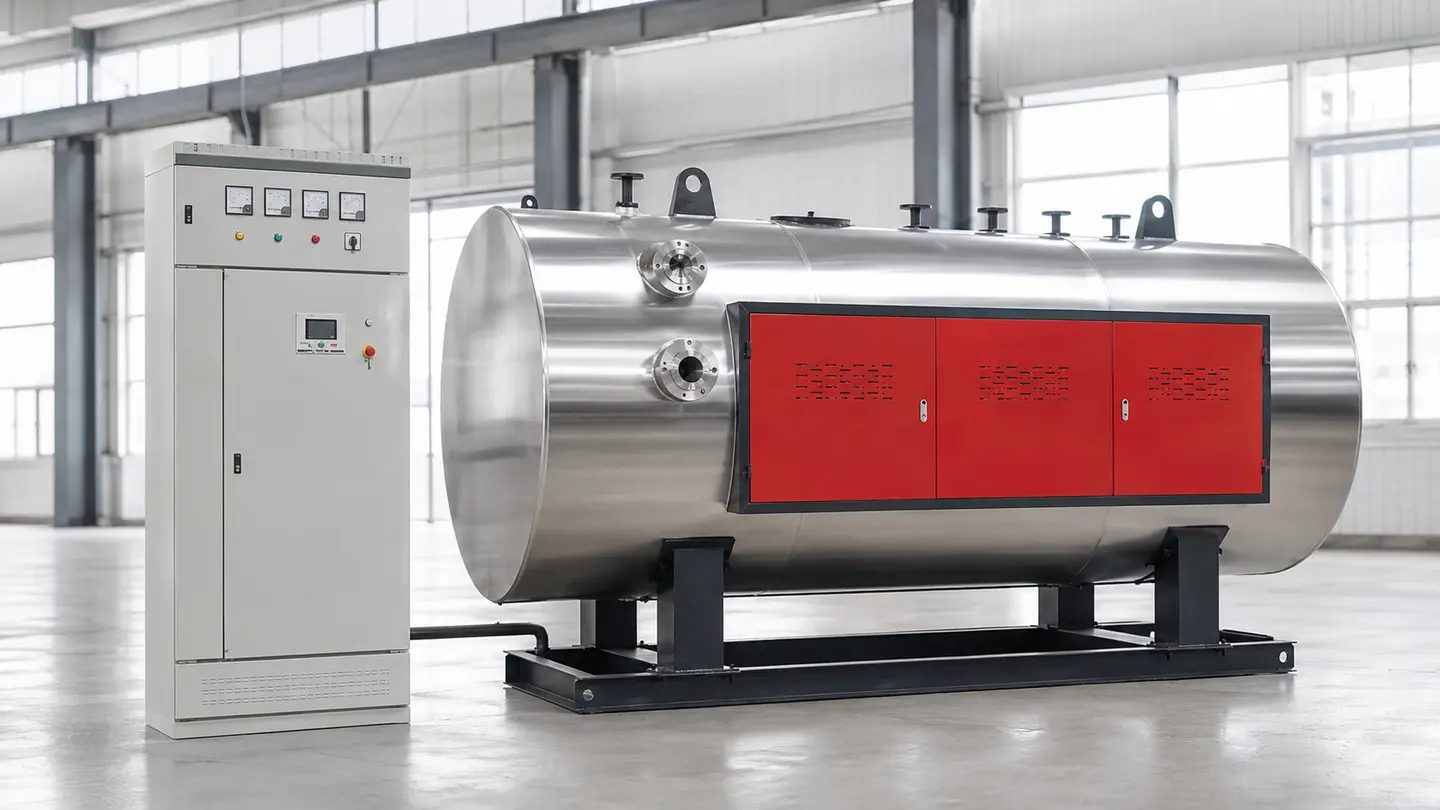
The WDR series uses grouped electric heating elements to transfer electrical energy directly into the boiler water. It does not require a burner, fuel-storage system or combustion-air and flue-gas route at the boiler.
The JINHONG WDR product range covers 0.5–6 t/h at 1.25 MPa. A technically suitable project still depends on electrical service, transformer capacity, local tariff, steam-load profile, feedwater quality and the plant’s permitted connected load.
No Burner or Fuel Handling
Electrical heating removes the burner, fuel tank, gas train, grate and fuel-feeding equipment from the boiler system.
Grouped Heating Control
Heating-element groups can be staged according to the approved load-control and electrical design.
Separate Control Cabinet
the standard arrangement positions the electrical cabinet separately from the boiler body to support heat dissipation and service access.
Compact Plant Arrangement
With no combustion train or chimney route from the boiler, the equipment boundary can be simpler where electrical capacity is available.
ELECTRIC-TO-STEAM ROUTE
Power, Water Level and Steam Pressure Work as One Controlled System.
Treated feedwater enters the boiler through the configured feedwater system. When the permitted water level and safety conditions are satisfied, the control system stages the electric heating groups to raise the water to saturation.
Steam collects in the upper steam space and leaves through the approved outlet, valve and safety arrangement. Pressure, water level, heating stages, pump operation and protective interlocks are coordinated by the selected control system.
REFERENCE SYSTEM DIAGRAM
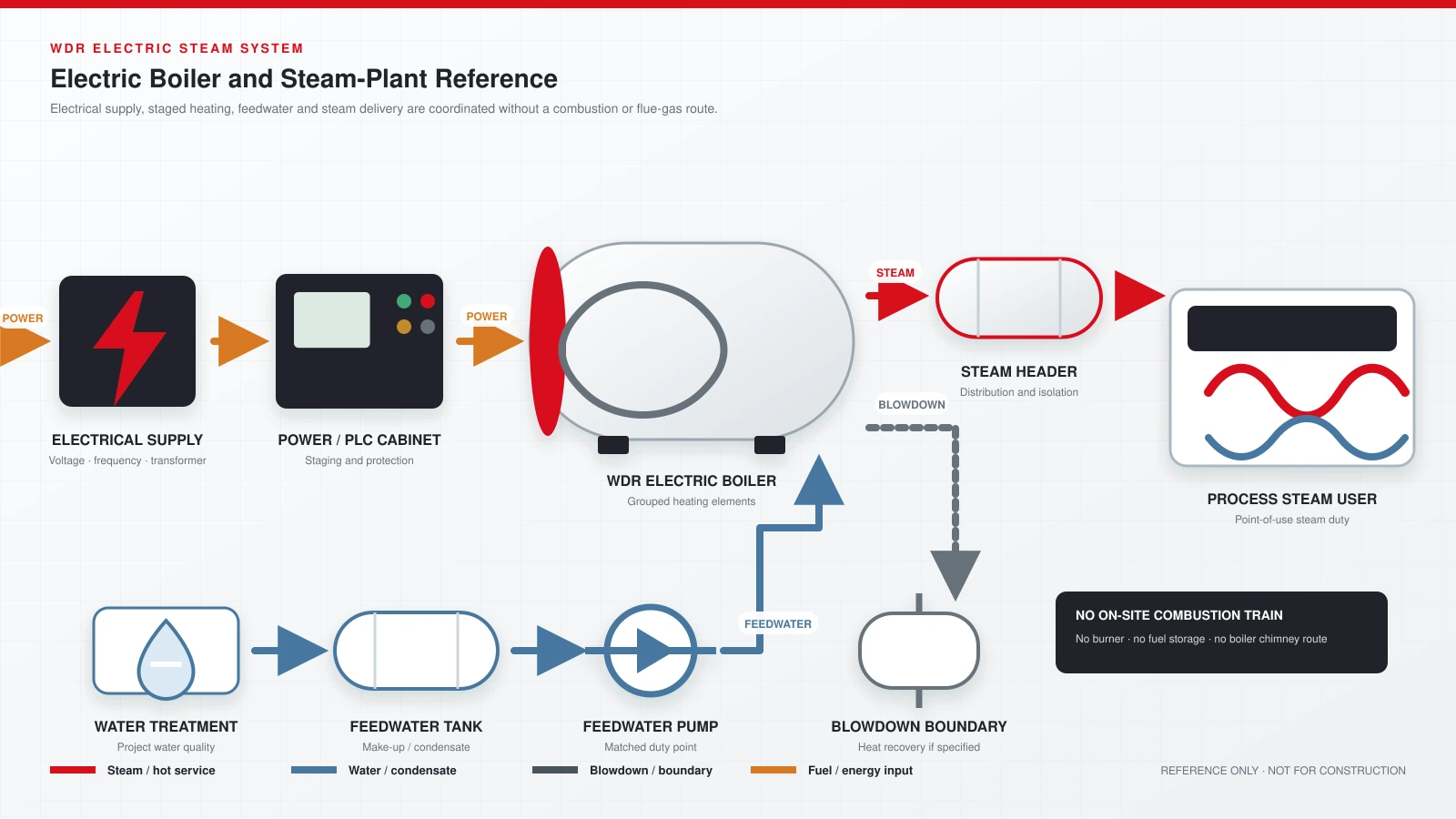
How the Electric Boiler Connects to Power, Water and the Steam User.
The WDR route coordinates the incoming electrical supply, power and PLC cabinet, electric boiler, steam distribution, process user, water treatment, feedwater equipment, blowdown boundary and safety interlocks.
DESIGN FEATURES
A Serviceable Electric-Boiler Layout for Industrial Steam Duty.
These features describe the current JINHONG WDR product route. Final electrical components, heating stages, materials, instruments and protection logic follow the approved technical proposal and drawings.
01 / HEAT SOURCE
Grouped Electric Heating
Heating-element banks can be divided into controlled groups for staged operation and service planning.02 / CONTROL
Separate Electrical Cabinet
The cabinet is arranged independently from the boiler body to support heat management, inspection and maintenance.03 / SERVICE
Flange-Connected Modules
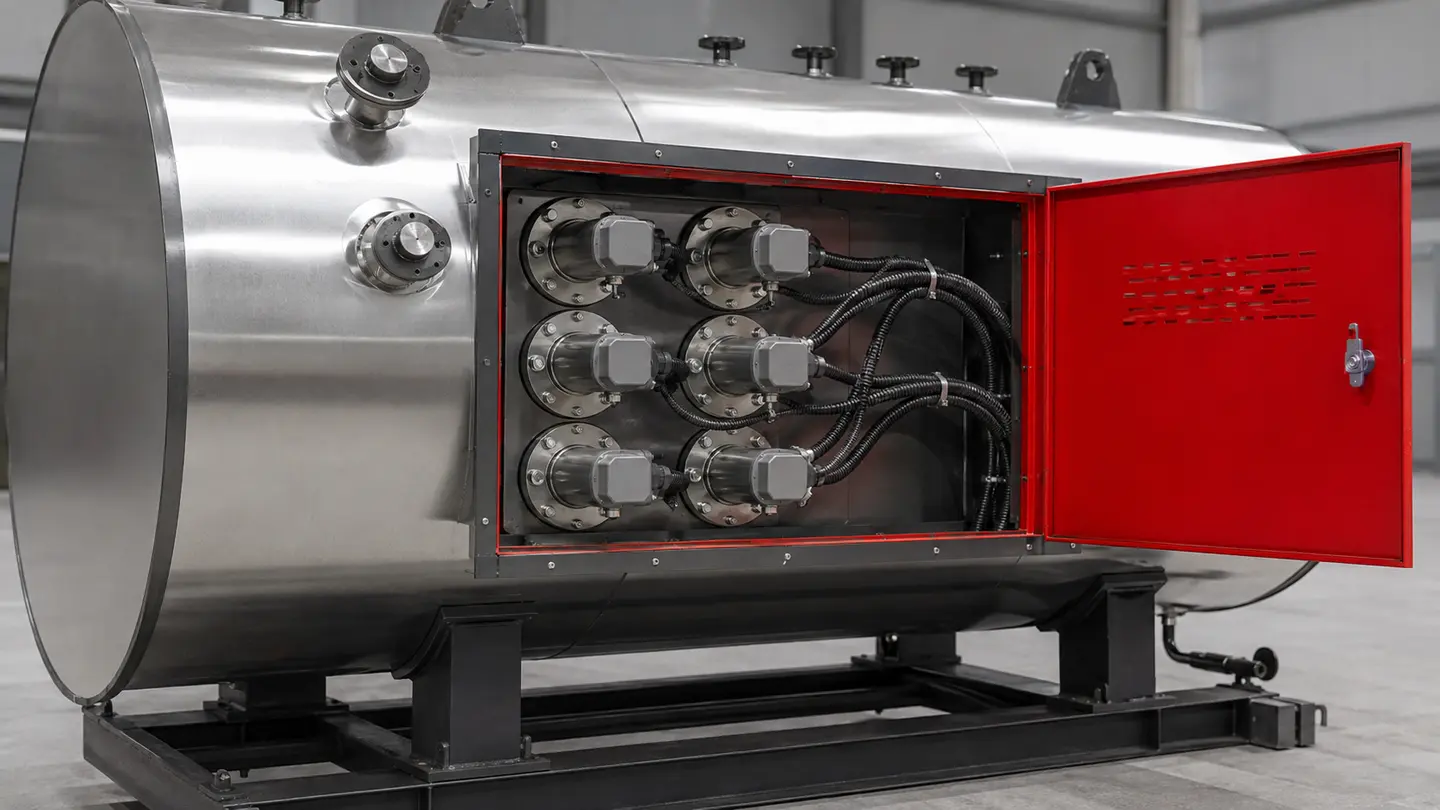
the product design includes grouped flange connections intended to simplify element-group removal and replacement.04 / STEAM SPACE
Horizontal Boiler Shell
The horizontal shell provides the configured water volume and steam space for saturated-steam production.05 / PROTECTION
PLC-Based Monitoring
The configured control route can display operating conditions and coordinate alarms and protective interlocks.06 / INSTALLATION
No Combustion Flue Route
The boiler itself does not create combustion exhaust, so no burner or boiler chimney is required.TECHNICAL DATA
Reference WDR Models from the JINHONG WDR product range.
These values support initial selection only. Final installed heating power, electrical load, component brands, protection, dimensions and system scope follow the approved proposal and drawings.
| Model | WDR0.5-1.25 | WDR1.0-1.25 | WDR2.0-1.25 | WDR3.0-1.25 | WDR4.0-1.25 | WDR6.0-1.25 |
|---|---|---|---|---|---|---|
| Rated Steam Capacity t/h | 0.5 | 1.0 | 2.0 | 3.0 | 4.0 | 6.0 |
| Rated Pressure MPa | 1.25 | 1.25 | 1.25 | 1.25 | 1.25 | 1.25 |
| Rated Steam Temperature °C | 194 | 194 | 194 | 194 | 194 | 194 |
| Thermal Efficiency | 99% | 99% | 99% | 99% | 99% | 99% |
| Reference Overall Size mm | 3036 × 1400 × 1806 | 3000 × 1400 × 1650 | 4000 × 1700 × 1950 | 3910 × 1800 × 2292 | 6800 × 1900 × 2100 | 6560 × 2170 × 2290 |
Steam condition: 194°C is the listed saturated-steam temperature corresponding to the listed 1.25 MPa rated-pressure route.
Efficiency boundary: 99% is a boiler heat-efficiency reference, not a claim about whole-site primary-energy efficiency or electricity cost.
Electrical load: Connected heating power, transformer demand, feeder current, cable size and protection are project-engineered and are not inferred from this table.
Dimensions: Reference only; use the approved general-arrangement drawing for foundation, access, lifting and transport planning.
ELECTRICAL ENGINEERING
Verify the Power Infrastructure Before Finalizing Boiler Capacity.
An electric steam boiler can simplify the boiler-room equipment boundary, but it transfers the energy requirement to the plant electrical system. The technical review must therefore start with both steam demand and available electrical capacity.
Send electrical and steam data- 01Voltage & Frequency
Confirm the plant supply standard and whether the proposed boiler voltage is available at the installation point.
- 02Transformer Capacity
Review existing transformer loading, permitted additional demand and any utility upgrade required.
- 03Steam-Load Profile
Separate normal load, peak load, startup demand and operating hours instead of selecting only from a nominal maximum.
- 04Electricity Tariff
Compare energy price, demand charges and operating schedule before deciding whether electricity is commercially suitable.
- 05Distribution & Protection
Define switchgear, feeder cables, grounding, short-circuit protection, cabinet environment and safe service access.
- 06Water Quality
Control hardness, dissolved solids and blowdown because scale on heating surfaces can reduce heat transfer and element life.
BOILER & SYSTEM BOUNDARY
Define the Boiler, Power Supply and Water-Steam Boundary Together.
A complete proposal must state what is included on the boiler side and what remains with the customer’s electrical and utility contractors. The final boundary is listed line by line in the approved technical proposal.
Transformer, upstream switchgear, plant distribution, power cables, installation works and local approvals are included only when explicitly listed in the agreed supply scope.
Define the supply boundaryAPPLICATIONS
Best Suited to Sites Where Electricity and Steam Demand Align.
Application suitability depends on connected power, local electricity cost, steam pressure, load stability, operating hours and plant utilities—not industry name alone.
Pharmaceutical & Laboratory
Point-of-use saturated steam where combustion equipment is undesirable and electrical infrastructure is available.
Food & Beverage
Process heating, cleaning and smaller distributed steam loads subject to the approved sanitary and utility boundary.
Laundry & Garment
Pressing, finishing and laundry steam where operating hours and electricity tariff support the commercial case.
Chemical & Precision Process
Controlled saturated-steam duty without an on-site combustion train at the boiler installation point.
Hospitals & Institutions
Utility steam applications subject to local codes, redundancy requirements and verified power availability.
Low-Carbon Electricity Sites
Projects evaluating electrification where the actual grid mix, renewable supply and whole-site energy balance are documented.
SELECTION GUIDANCE
Choose WDR for the Right Utility Conditions—not Only for Its Compact Layout.
WDR is attractive when a plant has sufficient electrical capacity, values the absence of on-site combustion and has a load profile compatible with the local electricity tariff. Where electrical infrastructure or operating cost is restrictive, gas, oil, biomass or a hybrid steam strategy may be more practical.
Review industry solutions- 01Strong WDR Fit
Verified spare transformer capacity, stable electrical supply and a commercially acceptable tariff.
- 02Point-of-Use Steam
Distributed steam close to the process can reduce long steam-pipe runs and simplify local plant arrangement.
- 03Combustion Restrictions
Useful where on-site fuel storage, burner operation or boiler flue-gas equipment is impractical.
- 04Review Alternatives
If demand is continuous and electricity is expensive, compare lifecycle cost with WNS, DZL or SZL routes.
FREQUENTLY ASKED QUESTIONS
WDR Electric Steam Boiler FAQ.
Which WDR capacities are listed in the WDR product range?
The JINHONG WDR product range lists 0.5, 1, 2, 3, 4 and 6 t/h models at 1.25 MPa with 194°C saturated steam.
Does an electric steam boiler need a chimney?
The WDR boiler has no combustion process, so the boiler itself does not require a combustion chimney. Building ventilation and any process exhaust remain subject to the site design and local rules.
Is 99% the total energy efficiency of the complete plant?
No. The listed value is a boiler heat-efficiency reference. It does not include electricity generation, grid losses, transformer losses, steam-distribution losses or electricity cost.
How much electrical power does the boiler require?
Connected heating power and operating current are finalized from capacity, feedwater condition, steam pressure, control stages and site electrical data. They must be stated in the approved technical proposal rather than estimated from the model name alone.
Can individual heating elements be replaced?
the product design includes grouped flange-connected heating elements intended for serviceability. The final module arrangement, spare-parts plan and replacement procedure follow the approved design.
Can multiple electric boilers operate in parallel?
Parallel operation can be engineered when load control, electrical capacity, steam-header design and redundancy requirements are defined for the project.
What information is needed for selection?
Send normal and peak steam demand, working pressure, operating hours, feedwater temperature, voltage, frequency, spare transformer capacity, local electricity tariff and destination.
START WITH STEAM & POWER DATA
Get a WDR Proposal Matched to Your Load and Electrical Infrastructure.
Send the normal and peak steam load, working pressure, operating schedule, voltage, frequency, transformer capacity, electricity tariff and destination. JINHONG will define the appropriate WDR route and system boundary for technical review.