
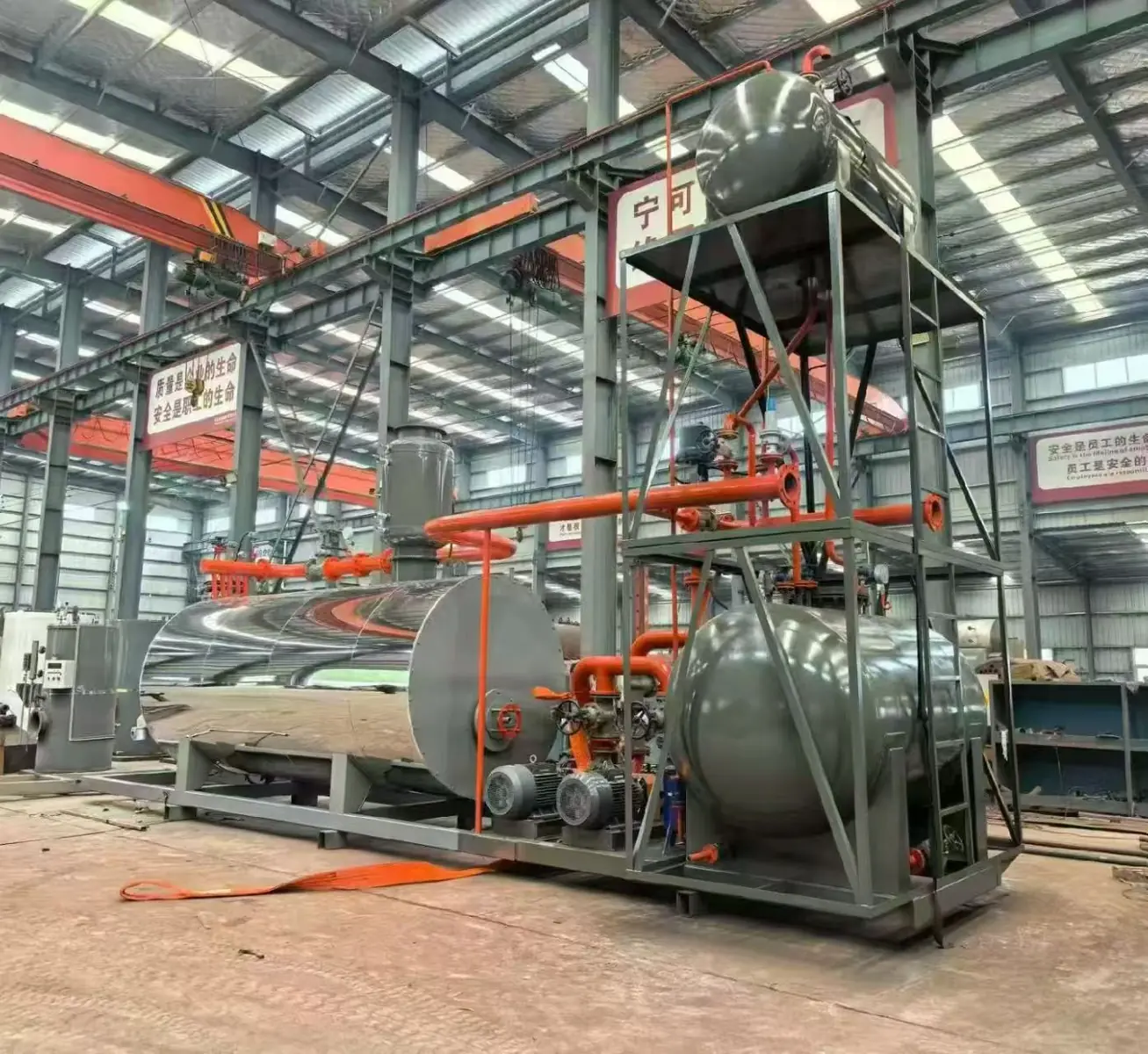
Think in systems, not isolated equipment
A quotation may use the phrase “complete boiler,” but the meaning differs between suppliers. It can describe a mounted burner and control panel, or it can include water treatment, feed pumps, fuel handling, emission equipment, stack and installation materials.
The safest approach is a written scope matrix. Every major component and service should be marked as supplied by the manufacturer, customer or local contractor.
The eight system blocks
1. Boiler or heater package
Pressure parts, furnace, casing, insulation, platform, local instruments, burner or grate, and the protection/control devices included by the manufacturer.
2. Fuel receiving and handling
Gas train or oil pumping and heating; for biomass, receiving, storage, screening, conveying, metering and furnace feeding. The boundary often begins well before the burner or hopper.
3. Water and feedwater
Raw-water pretreatment, make-up tank, condensate tank, deaeration, chemical dosing, feed pumps and related valves/instruments.
4. Steam, hot-water or thermal-oil circuit
Main headers, circulation pumps, separators, traps, pressure reduction, expansion equipment, condensate return and connection to process users.
5. Flue gas and emission control
Ducting, fan, dust collector or other treatment, dampers, monitoring points and stack. Selection must match the fuel and local limits.
6. Blowdown, drains and heat recovery
Continuous and bottom blowdown routing, flash tank, cooling or recovery, drains and safe discharge.
7. Electrical and control
Power distribution, motor starters, variable-frequency drives, PLC/HMI, interlocks, field instruments, cables and connection boundary.
8. Civil work and services
Foundation, boiler house, ventilation, lighting, fire protection, lifting, installation, insulation finishing, testing, training and statutory inspection.
Build a scope matrix before comparing price
| Item | Manufacturer | Customer/local contractor | Interface to confirm |
|---|---|---|---|
| Boiler package | Design and supply | Foundation and placement | Loads, anchor points and lifting |
| Fuel system | Defined package equipment | Fuel receiving and utilities as agreed | Pressure, quality, storage and connection |
| Water treatment | Equipment if included | Raw-water source and chemicals | Analysis, flow, drain and power |
| Stack/emissions | Specified components | Permit and civil support as agreed | Limit, height, monitoring and duct route |
| Commissioning | Engineer scope as contracted | Labor, utilities and production readiness | Visa, travel, tools and acceptance test |
Documents are part of the system
A complete delivery also needs drawings, foundation loads, utility list, piping and instrumentation information, wiring diagrams, manuals, test certificates and packing lists. The document language, approval cycle and local certification should be agreed before production.
For export projects, define which parts are factory assembled and which are shipped loose. Container limits, site access and local lifting capacity can change the package design.
Define commissioning and acceptance
Installation supervision, cold checks, water testing, burner or grate tuning, protection-device verification, operator training and performance acceptance are separate activities. State which party supplies fuel, water, electricity, test instruments and local labor.
The final acceptance basis should use the agreed fuel, load range, water quality and emission conditions. A performance promise without these boundaries is difficult to verify.
Information to prepare before engineering review
- Itemized equipment and service scope matrix
- Process and utility connection points
- Fuel receiving, storage and supply boundary
- Raw-water and condensate-return scheme
- Emission limit and stack/duct responsibility
- Electrical voltage, frequency and cable boundary
- Civil, installation and insulation work
- Commissioning, training and acceptance-test responsibilities
These inputs allow a boiler supplier to check the heat source, pressure, fuel system, auxiliaries and site boundary as one system instead of quoting the boiler body in isolation.
Technical references
This guide summarizes established engineering principles. Final selection must be confirmed against project data, local codes and the equipment manufacturer’s design.