
Boiler Efficiency vs Combustion Efficiency: Compare the Right Numbers
An engineering guide to understanding efficiency definitions, fuel heating-value bases, measurement uncertainty and real operating performance.
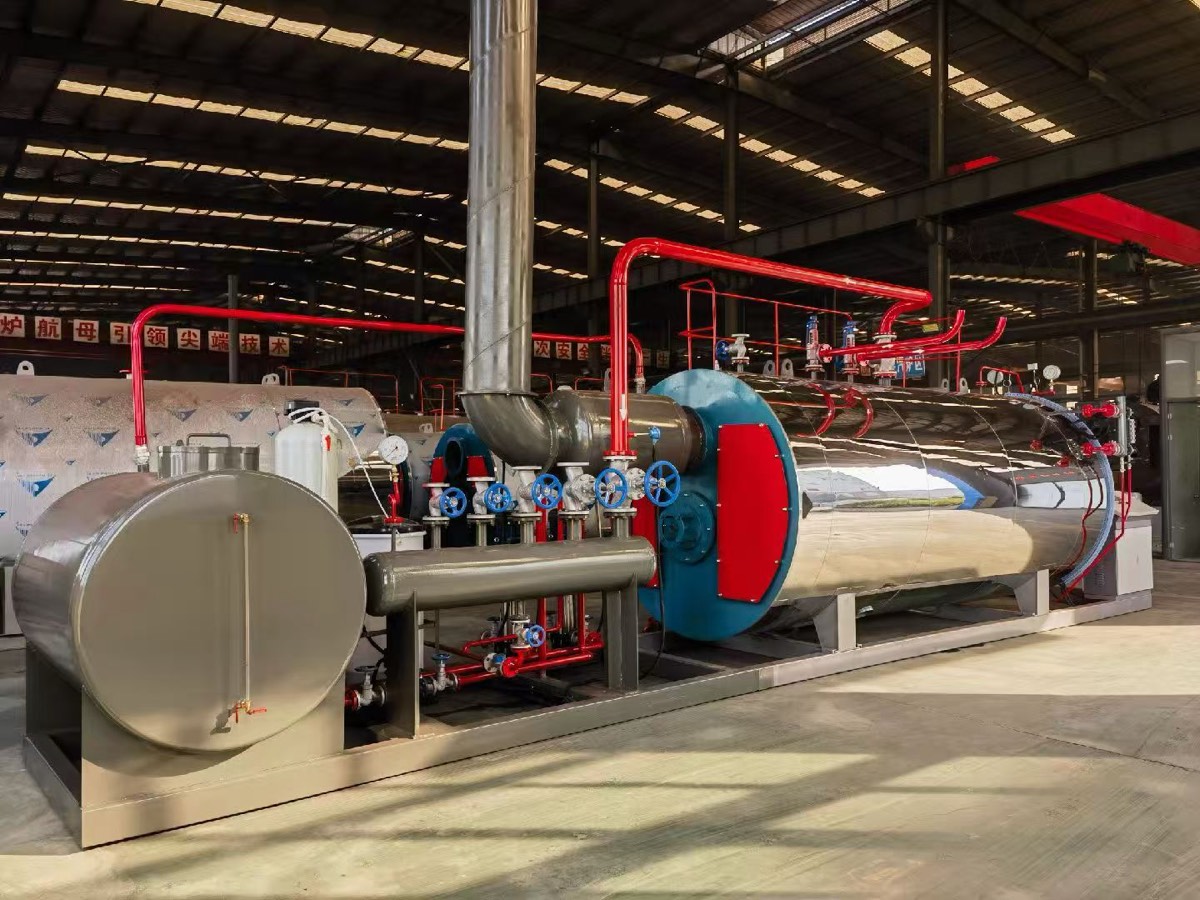
Two boiler proposals can show different efficiency percentages without describing different energy performance. One may use a net fuel heating value; another may use a gross value. A third figure may come from a combustion analyzer rather than a measured fuel-to-steam test. Before ranking the numbers, establish exactly what each percentage includes.
This guide explains boiler efficiency vs combustion efficiency from a plant evaluation perspective. The aim is a comparison that can be checked against measurements, not a higher-looking percentage.
Start with the measurement boundary
A useful efficiency statement identifies the equipment boundary, useful output, energy input, calculation method and operating condition. Ask for these details beside the percentage, rather than in a separate sales explanation.
| Reported figure | What to clarify |
|---|---|
| Combustion or stack-loss efficiency | Which flue-gas losses the calculation includes and which losses it excludes |
| Fuel-to-steam efficiency | Steam energy delivered relative to incoming feedwater, divided by fuel energy over the same period |
| Boiler-house performance | Whether feedwater preparation, standby units and auxiliary electricity are inside the assessment |
| Process energy performance | Where useful heat is measured after distribution and process losses |
Combustion readings remain valuable: flue-gas oxygen and temperature help identify combustion-related losses. However, an analyzer result should not automatically be treated as a complete plant energy balance. Check the instrument’s calculation and selected fuel. The U.S. Department of Energy combustion-efficiency tip sheet explains the role of stack temperature and flue-gas composition.
HHV and LHV can change the percentage
Higher heating value, also called gross calorific value, includes the energy associated with condensing combustion-produced water vapor. Lower heating value, or net calorific value, excludes that contribution. For the same measured useful output, dividing by the smaller LHV input produces a larger percentage. A condensing system can therefore report more than 100% on an LHV basis without creating energy. Its accounting reference is different, not the laws of thermodynamics. Spirax Sarco’s boiler-efficiency explanation describes gross and net calorific values.
An illustrative comparison
Assume, only to demonstrate the arithmetic, that one test delivers 900 energy units of useful heat. The same quantity of fuel is recorded as 1,100 units on an HHV basis and 1,000 units on an LHV basis. Efficiency is 900 ÷ 1,100 = 81.8% HHV, or 900 ÷ 1,000 = 90.0% LHV. Neither result means that the boiler changed.
These are assumed values, not JINHONG product ratings or a universal fuel conversion. Obtain the actual fuel analysis or supplier heating-value statement before converting a proposal.
A credible test needs more than a screen reading
For a simplified steady steam-output calculation, useful heat is steam mass flow multiplied by the difference between steam and feedwater specific enthalpy. The real test must also define steam condition and account for material flows crossing its boundary. Feedwater temperature, steam pressure and moisture assumptions can materially affect the result.
A competent engineer should establish a test plan covering instrumentation, sampling, stable operating conditions, corrections and uncertainty. ASME PTC 4 provides a framework for fired steam-generator performance testing; its public scope also notes that variable fuels can introduce additional uncertainty. An informal site check should not be described as an ASME test merely because it uses an efficiency formula. ASME PTC 4 scope.
Rated performance is not annual performance
A stable test at one load does not describe every production shift. Start-up, standby and repeated cycling change the annual result. The DOE identifies short cycling and poor allocation of loads among boilers as potential efficiency problems. DOE guidance on short-cycling losses.
For example, a factory operating one shift should ask how overnight shutdown and morning start-up are represented. A continuously operating plant should ask about its most common load, not only maximum capacity. Compare fuel use per measured unit of useful output over representative periods, and record any production changes before attributing an improvement to the boiler.
Questions to include in a boiler comparison
- Is the fuel input stated on an HHV or LHV basis?
- Is the result measured, calculated, guaranteed under stated conditions, or merely indicative?
- What fuel composition, load, steam conditions and feedwater temperature apply?
- Does the boundary include the economizer, blowdown and auxiliary energy?
- What instruments, calibration records and uncertainty support the result?
- How will acceptance be demonstrated at the destination site?
Use the same assumptions when evaluating biomass versus gas operating costs. Review the complete boiler-system boundary before comparing equipment-only figures.
Frequently asked questions
Is combustion efficiency the same as boiler efficiency?
Not necessarily. Terminology varies. Ask what losses and equipment the stated calculation includes before using it as fuel-to-steam efficiency.
Does a lower stack temperature always prove better efficiency?
No. Measurements need comparable fuel and load conditions. Heat recovery also has material and condensation limits that require design review.
Can efficiency alone determine which boiler to buy?
No. Consider load matching, fuel suitability, water quality, emissions requirements, maintainability and service support alongside comparable performance data.
For a project review, send JINHONG your load profile and fuel information. Any selection or performance commitment must be based on the confirmed project conditions.
Technical references
Primary sources consulted for this guide. Source publication dates and equipment contexts differ; historical examples are not JINHONG performance claims.