Food & Beverage Boiler Solution
Reliable Steam and Hot Water for Safe, Repeatable Food and Beverage Production.
Cooking, brewing, pasteurization, sterilization, blanching, cleaning and CIP create different load patterns. JINHONG designs the utility system around the product, vessel, cycle time and hygiene boundary—not a generic industry label.
Operating Reality
Food factories need controlled heat at the point of use.
A steam boiler for food processing must supply the required pressure and recovery rate while supporting clean operation, reliable water treatment and practical maintenance. Direct-contact steam, jacketed-vessel heating and plant hot water do not have the same quality boundary, so the final proposal must define how steam contacts the product.
Cooking and vessel heating
Jacket volume, product mass, starting temperature and batch time determine the useful heat duty.
Steam quality boundary
Plant steam, filtered culinary steam and clean steam require different treatment and material decisions.
Repeated batch cycles
The boiler must recover between batches without oversizing the system for long idle periods.
Application Map
Define where the heat goes before choosing the boiler.
| Food process | Utility need | Common risk | Engineering focus |
|---|---|---|---|
| Cooking kettles and jacketed vessels | Saturated steam or hot water | Slow heat-up and uneven batches | Batch mass, vessel area, cycle time and control valve |
| Pasteurization and sterilization | Stable controlled steam | Temperature variation and insufficient recovery | Peak load, control accuracy and steam dryness |
| CIP and plant cleaning | Hot water and/or steam | Demand overlaps with production | Storage, heat exchanger and operating schedule |
| Drying, baking and hot air | Steam, thermal oil or hot air | Choosing the wrong heat medium | Required air temperature and direct/indirect heating boundary |
Problems We Solve
A good proposal separates the boiler rating from the usable heat delivered.
Long pipe runs, cold feedwater, poor condensate return, scale and simultaneous batch starts can reduce useful process performance. The system should be checked from fuel input to the final heat exchanger or vessel.
Batch time is too long
Confirm product mass, temperature rise, vessel heat-transfer area and available steam pressure.
Water or steam quality is inconsistent
Define feedwater treatment, blowdown, separation, filtration and the direct-contact boundary.
Utility demand changes by shift
Use realistic production schedules and boiler turndown instead of sizing every user at full load.
System Scope
The boiler room is more than the boiler body.
Final food-processing utility performance depends on feedwater, treatment, condensate return, steam distribution, controls, fuel train, exhaust route and documented supply boundaries.
- Feedwater tank, pumps and water treatment
- Steam separator, valves, instruments and traps
- Condensate recovery where the process permits
- Burner, fuel train or biomass feeding system
- Economizer and exhaust treatment as required
- Agreed drawings, manuals and commissioning scope
Recommended Equipment
Food-processing boiler options linked to verified product pages.
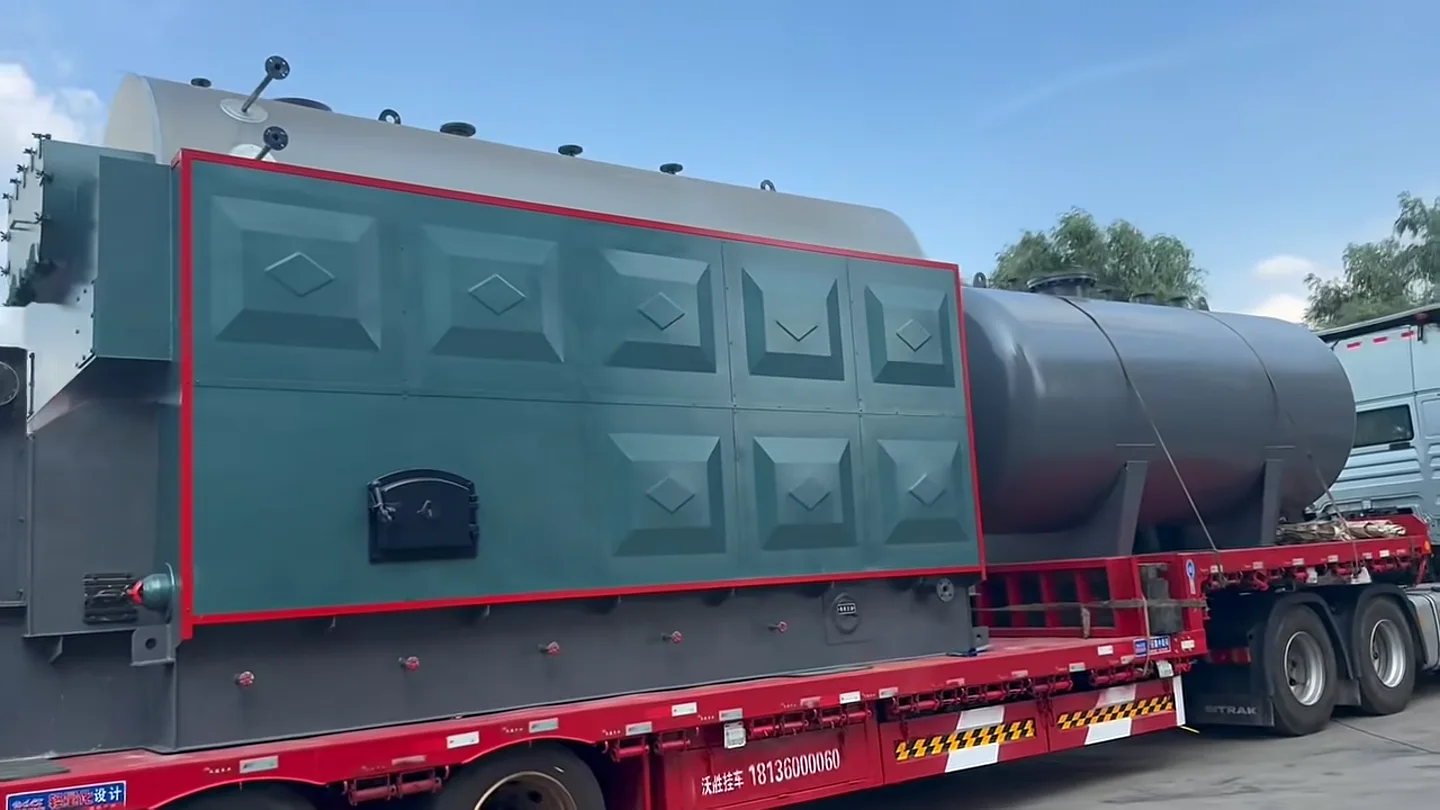
VERIFIED PROJECT
A Food-Processing Project You Can Verify.
Use the project record as manufacturing and delivery evidence; final boiler selection still depends on each plant’s process data.
FAQ
Food factory boiler questions.
How do I calculate steam demand for cooking kettles?
For each kettle, confirm the working volume, product mass, starting and final temperature, batch time, jacket pressure and number of simultaneous batches. Boiler selection should then include realistic piping and operating losses.
Can boiler steam contact food directly?
Only after the required steam-quality standard and contamination boundary are defined. Direct-contact applications may need filtration, treatment and material controls beyond ordinary plant steam.
Should a food factory choose steam or hot water?
Choose according to the process temperature, heat exchanger, response time and hygiene requirement. Using steam where hot water is sufficient may add unnecessary pressure-system complexity.
What data should be sent for a proposal?
Send the product and process, batch capacity, temperature change, cycle time, equipment quantity, simultaneous operation, required pressure, fuel, operating hours and destination.
Engineering Proposal
Build the utility system around the food process.
Share the vessel, production cycle, temperatures, pressure and available fuel. JINHONG will define the boiler, feedwater, controls and connected system scope.
Request a Food Boiler Proposal