
COMPACT GAS / OIL STEAM BOILER
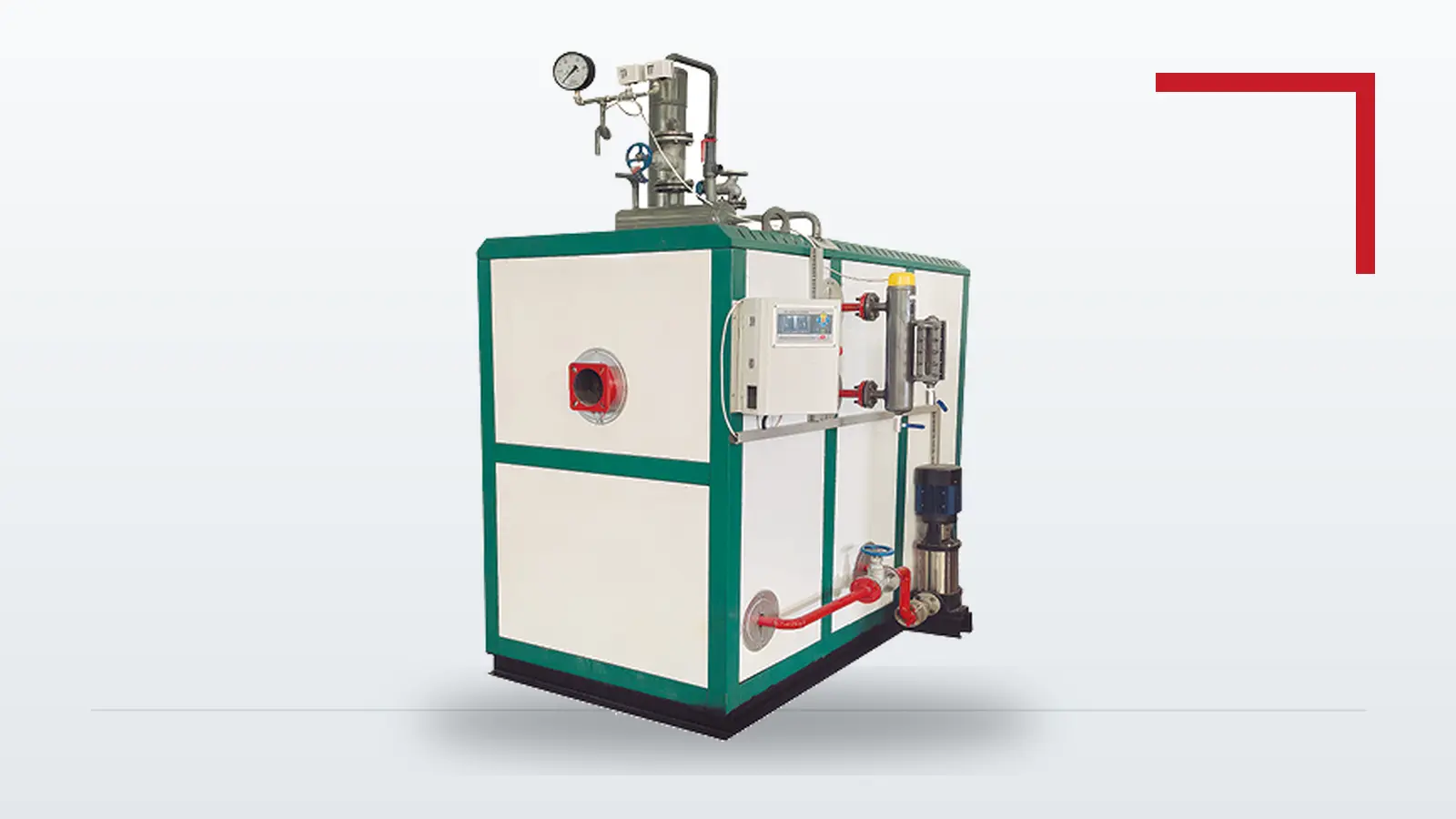
LSS Gas/Oil-Fired D-Class Steam Boiler
A compact steam boiler family for 500-2,000 kg/h saturated-steam duties, with listed 0.8 MPa working pressure and automatic combustion and water-supply control.
- Listed Capacity
- 0.5-2.0 t/h
- Working Pressure
- 0.8 MPa
- Saturated Steam
- 175-175.4°C
- Design Efficiency
- 92.4-95.6%
PRODUCT OVERVIEW
A Compact D-Class Steam Route with Three Listed Capacities.
The LSS family uses gas or liquid-fuel combustion in a compact packaged arrangement. The listed models cover 500, 1,000 and 2,000 kg/h saturated-steam output at 0.8 MPa.
The design description identifies a full-wet-back, parallel-flow, three-pass flue-tube route with a corrugated furnace and spiral flue tubes. Automatic control supports load regulation and water supply, with the burner and safety devices selected for the final project.
LSS0.5-0.8-YQ
500 kg/h saturated steam with listed 92.4% design efficiency.
LSS1.0-0.8-YQ
1,000 kg/h saturated steam with listed 93.6% design efficiency.
LSS2.0-0.8-YQ
2,000 kg/h saturated steam with listed 95.6% design efficiency.
D-Class Equipment Route
Pressure classification, registration and installation requirements must be checked for the destination.
WORKING PRINCIPLE
Automatic Combustion Transfers Heat Through a Three-Pass Wet-Back Route.
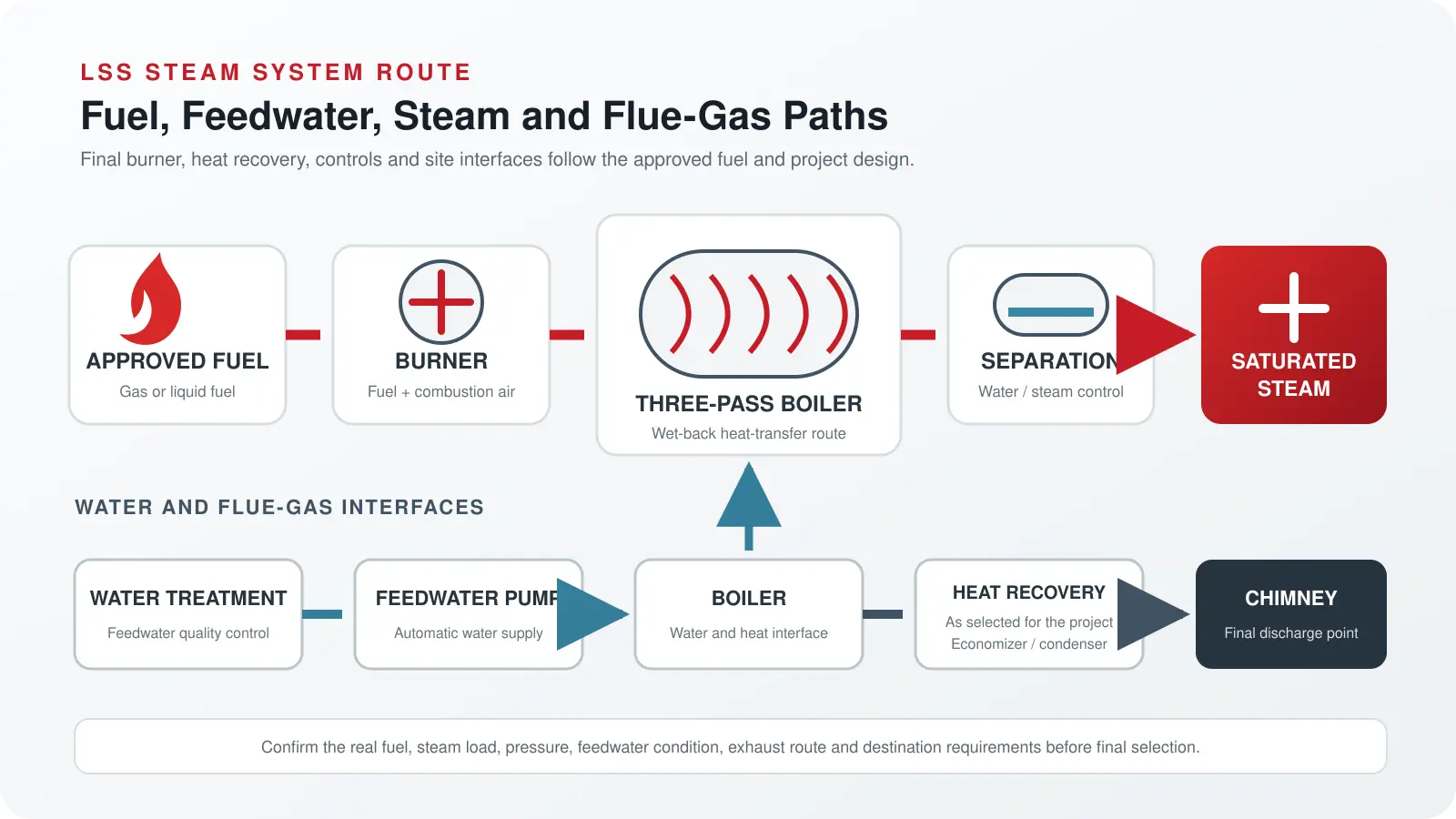
The selected burner mixes the approved fuel with combustion air and directs the flame into the furnace. Hot gas passes through the configured heat-transfer route before leaving through the exhaust interface.
Treated feedwater is supplied by the configured pump. Heat converts the water into saturated steam, while the controller monitors load, water level and pressure through the selected instruments and protection devices.
TECHNICAL DATA
LSS0.5, LSS1.0 and LSS2.0 Listed Configurations.
The values below define the three listed LSS models. Final dimensions, burner selection, interfaces, instruments and supply scope follow the approved technical proposal and project drawings.
| Item | LSS0.5-0.8-YQ | LSS1.0-0.8-YQ | LSS2.0-0.8-YQ |
|---|---|---|---|
| Rated Evaporation | 500 kg/h | 1,000 kg/h | 2,000 kg/h |
| Rated Working Pressure | 0.8 MPa | 0.8 MPa | 0.8 MPa |
| Saturated Steam Temperature | 175°C | 175°C | 175.4°C |
| Feedwater Temperature | 20°C | 20°C | 20°C |
| Design Efficiency | 92.4% | 93.6% | 95.6% |
| Applicable Fuels | Heavy oil, light oil, natural gas, liquefied gas and city gas, subject to burner and fuel-supply confirmation | ||
| Control Route | Automatic control for the gas / oil steam boiler package | ||
| Reference Dimensions (L × W × H) | 2020 × 1120 × 2043 mm | 2400 × 2400 × 2500 mm | 2700 × 1290 × 2600 mm |
Model selection: Select capacity from the real average and peak steam load, operating hours, pressure at the use point and piping loss. Do not select only from the nominal machine name.
Efficiency: The listed design values depend on the selected model and approved operating condition. Actual performance follows the final fuel, burner tuning, water condition, exhaust route and site operation.
FUEL & SITE ENGINEERING
Confirm the Real Fuel Supply Before Burner Selection.
The fuel name alone is not sufficient. Gas pressure, gas composition, liquid-fuel viscosity, supply temperature, available utilities and destination emission limits affect burner configuration and system performance.
Send fuel and site data →- 01Fuel Type
Confirm natural gas, LPG, city gas, light oil or heavy oil.
- 02Supply Conditions
Provide gas pressure and composition or liquid-fuel grade and temperature.
- 03Electrical Supply
Confirm voltage, phase and frequency for the destination.
- 04Feedwater
Provide water analysis and planned treatment route.
- 05Exhaust & Emissions
Confirm chimney route and local emission requirements.
- 06Local Classification
Check registration, inspection and operator requirements with the destination authority.
STEAM SYSTEM ROUTE
Coordinate Fuel, Feedwater, Steam and Flue-Gas Interfaces.
Stable steam delivery depends on the burner, feedwater quality, automatic water supply, control and safety devices, exhaust route and plant connection.
For downstream steam-system reliability, review steam water-hammer causes and prevention and steam-trap selection and inspection. Final piping, drainage and trap selection must follow the actual process layout and operating conditions.
PROJECT SCOPE
Define Every Included Item and Site Responsibility.
The formal proposal must identify the exact model, burner, controller, feedwater equipment, valves, instruments, exhaust equipment and documentation. Items are included only when they appear in the agreed supply scope.
Civil works, boiler-room piping, fuel storage or gas regulation outside the agreed package, installation, electrical cabling, destination approvals, registration, inspection and emissions testing are included only when explicitly stated.
APPLICATIONS
Compact Saturated-Steam Supply for Industrial Processes.
Final suitability depends on the real steam load, pressure at the use point, operating pattern, fuel conditions, water quality and local equipment requirements.
Food Processing
Steam for cooking, cleaning and indirect process heating after hygienic requirements are confirmed.
Textile & Garment
Steam for pressing, washing, dyeing and finishing equipment within the listed capacity range.
Chemical Processing
Steam for vessels, reactors and indirect heating with compatible materials and controls.
Packaging & Printing
Steam duties for compact production lines and supporting process equipment.
Commercial Laundry
Saturated steam for washers, dryers, presses and related equipment after load review.
General Manufacturing
Batch or continuous process steam where compact installation is required.
FREQUENTLY ASKED QUESTIONS
LSS Gas/Oil-Fired D-Class Steam Boiler FAQ.
Which LSS capacities are listed?
The listed models are 500, 1,000 and 2,000 kg/h, corresponding to LSS0.5-0.8-YQ, LSS1.0-0.8-YQ and LSS2.0-0.8-YQ.
What is the rated working pressure?
All three listed LSS models use 0.8 MPa rated working pressure. Pressure at the process equipment must be checked after piping loss and any pressure-reduction arrangement.
Which fuels can be selected?
The listed fuel range includes heavy oil, light oil, natural gas, liquefied gas and city gas. The burner must be confirmed from the actual fuel and supply condition.
Is LSS the same as the low-pressure ZFQ series?
No. The LSS models on this page are listed at 0.8 MPa. The ZFQ low-pressure route is presented separately and its pressure data must not be applied to LSS.
Is the LSS boiler fully automatic?
The listed design includes automatic load regulation and water supply. Final controls, instruments, burner management and safety devices follow the approved configuration.
Does D-Class mean the same in every country?
No. Equipment classification, registration, inspection and operator rules vary by destination. The local authority or qualified inspector should confirm the applicable requirements.
TECHNICAL SELECTION
Send the Steam Load, Pressure, Fuel and Destination Data.
Share the average and peak steam demand, required pressure, operating hours, fuel conditions, feedwater information and destination so the suitable LSS model and complete system can be checked.