
How to Size a Steam Generator for Two Laundry Dryers
A practical procurement workflow for matching one steam generator to two batch dryers: collect manufacturer data, map overlapping demand, evaluate cold starts and check the steam and condensate connections.
To size a steam generator for two laundry dryers, first establish how much steam each dryer needs and when both require their highest flow. The number of machines alone cannot determine the generator rating. Two dryers with different batch sizes, inlet conditions or schedules can create very different demands, even when both are described as industrial tumble dryers.
The buyer’s useful starting document is a two-machine load schedule. It connects the dryer supplier’s requirements to the laundry’s production plan and gives the steam-system supplier a basis for checking capacity, pressure and startup behavior.
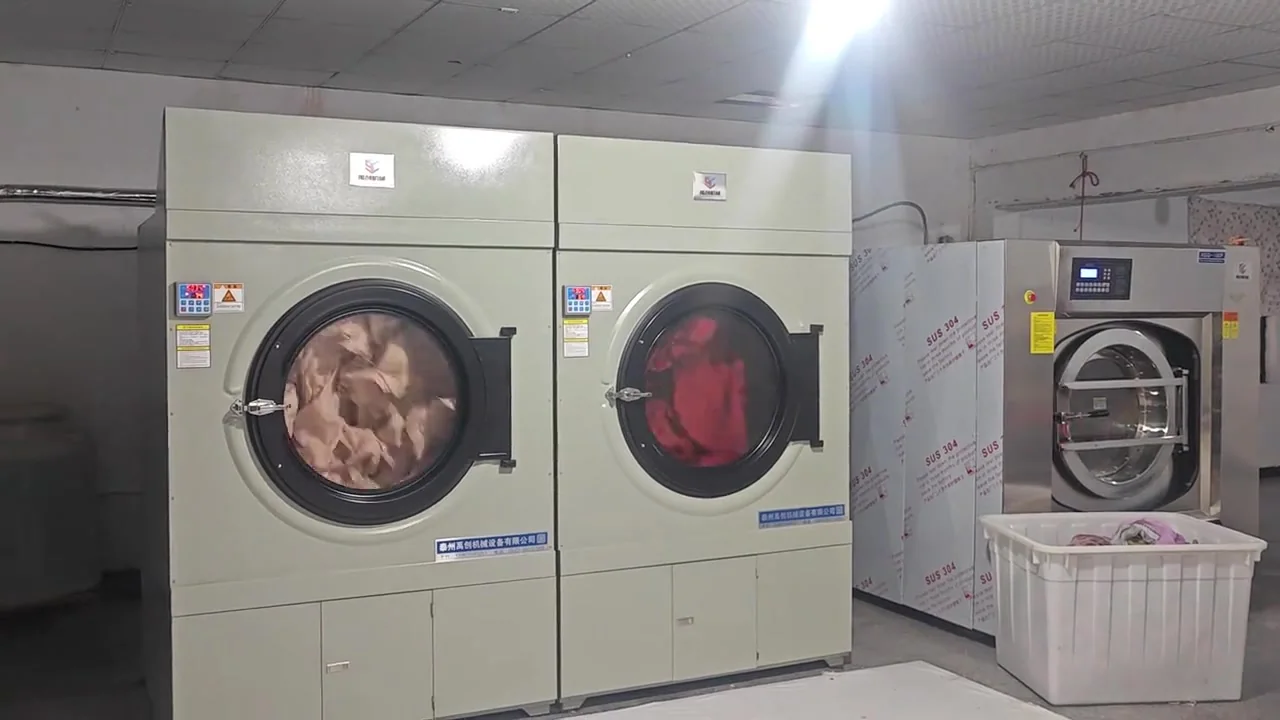
The Malaysia two-dryer configuration
JINHONG’s Malaysia laundry project uses one LHS0.5-0.7-M biomass pellet steam generator, rated at 500 kg/h and 0.7 MPa, to supply two customer-owned dryers. JINHONG provided remote installation, commissioning and training guidance. The following workflow explains what a new buyer should provide before selecting a similar arrangement.
1. Obtain a separate data sheet for each dryer
Ask the dryer manufacturer to identify the conditions behind every consumption figure. A thermal rating, a maximum steam flow and an average per batch are different inputs. Spirax Sarco’s thermal-rating guidance explains why a nameplate rating should not automatically be treated as the actual process load.
| Input | Record for dryer A and dryer B | Why it matters |
|---|---|---|
| Machine and batch | Manufacturer, model, textile type and dry-load mass | Connects the steam requirement to the intended work |
| Steam requirement | Peak kg/h, average kg per batch, required inlet pressure and source document | Separates a short flow peak from total consumption |
| Batch conditions | Starting moisture condition, target finish and expected cycle duration | Defines the production condition being evaluated |
| Connections | Steam-control arrangement and condensate outlet requirements | Allows the connection package to be reviewed |
If only electrical motor power is available, mark the steam demand as unknown. Ask for the steam-heating specification or an approved measurement plan; do not convert the motor rating into a steam requirement.
2. Map the batches on one shared timeline
For a representative shift, record when each dryer loads, calls for steam, continues drying and unloads. Add the expected batch condition beside each period. Use observation intervals fine enough to capture the shortest relevant steam-demand peak, with the instrument and sampling method agreed by the responsible engineer.
| Production period | Dryer A | Dryer B | Review question |
|---|---|---|---|
| First batches | Start time and peak duration | Start time and peak duration | Do startup demands overlap? |
| Normal overlap | Recorded running demand | Recorded running demand | What combined flow must be sustained? |
| Loading gap | Running or idle | Running or idle | How low does the total load become? |
Only credit staggered starts if the laundry can maintain that schedule while meeting throughput targets. A convenient schedule on paper is not a reliable capacity assumption if both machines routinely restart together. Use the general boiler-capacity method to combine verified simultaneous loads and separately justified allowances.
3. Review cold starts separately from a warm shift
A first start after a shutdown also heats the steam distribution system. Spirax Sarco distinguishes pipe warm-up and running loads; the laundry schedule should do the same. Record the available startup window, whether both dryers must start immediately, and which other consumers share the supply.
Ask the supplier to state the conditions behind the proposed available output, including feedwater and specified fuel. A biomass proposal should identify the accepted pellet specification. Discuss the lowest sustained demand as well as the peak: the turndown and short-cycling guide explains why adding capacity without considering low-load operation can create another mismatch.
4. Check delivery to the dryers
A suitable generator rating does not by itself confirm sufficient pressure at both dryer inlets. Supply the pipe route, branch lengths and existing pressure records under simultaneous operation. Review boiler pressure versus equipment working pressure with the dryer requirements; the case’s rated pressure is not a setting to copy.
Also identify where condensate drains, the return arrangement and whether each source is suitable for recovery. Use the condensate recovery guide for that assessment. Piping, drainage and protective arrangements require qualified design and commissioning.
Send an assessable inquiry
Request a laundry steam proposal with both machine data sheets, the shared batch schedule, steam-route sketch, fuel information and service expectations. Ask the quotation to state its sizing assumptions and the agreed conditions for checking both dryers together. This creates a decision that can be reviewed before purchase and verified at commissioning.