
Biomass Boiler Emission Control
Dust Collection and Flue-Gas Treatment Designed Around the Actual Fuel.
Cyclones, bag filters and wet scrubbers are not interchangeable accessories. JINHONG defines the biomass boiler dust-control route from fuel ash, particle loading, gas temperature, pressure loss, residue handling and the destination emission limit.
System Engineering
The correct collector begins upstream of the collector.
Fuel moisture, ash chemistry, particle size, excess air, furnace temperature and gas velocity determine what reaches the flue-gas treatment system. A collector selected only from boiler capacity can suffer excessive pressure loss, corrosion, bag damage, wastewater problems or an outlet concentration that does not meet the agreed limit.
Analyse ash and moisture
Rice husk, wood chips, pellets, bagasse and agricultural residues produce different dust and ash behaviour.
Define flow and temperature
Actual gas volume, temperature and inlet loading determine collector size and material decisions.
Start from the local requirement
The guaranteed boundary must state the required outlet particulate limit and operating conditions.
Treatment Routes
Select and combine equipment according to the project boundary.
| Equipment | Primary function | Best used when | Key check |
|---|---|---|---|
| Cyclone / multi-cyclone | Remove larger entrained particles | Pre-separation or moderate particulate control | Cut size, pressure loss and erosion |
| Bag filter | High-efficiency dry particulate capture | Lower outlet dust is required and gas condition is suitable | Temperature, moisture, sparks, dew point and bag material |
| Wet scrubber | Wet particulate removal and gas cooling | Water use and residue treatment are acceptable | Wastewater, corrosion, plume and pressure loss |
| Combined route | Stage particle removal and protect downstream equipment | Fuel and emission conditions require more than one stage | Fan margin, control sequence and total lifecycle cost |
Common Failure Modes
Meeting the limit requires stable operation, not only installed equipment.
The complete system must coordinate air leakage, duct velocity, ash discharge, hopper heating, cleaning cycles, induced draft and operator maintenance.
Visible smoke or high particulate
Check combustion stability, collector loading, bypass leakage, cleaning condition and the actual measurement basis.
Fan current and pressure loss are high
Review blocked surfaces, ash buildup, duct sizing, damper position and collector resistance.
Bag life is short
Investigate gas temperature, condensation, sparks, chemical attack, bag material and cleaning pressure.
Define Before Quotation
No single dust collector can be promised for every biomass project.
A formal proposal should state the fuel basis, inlet condition, target outlet limit, pressure loss, ash route, wastewater boundary and instruments included.
- Representative fuel analysis and photos
- Boiler capacity and expected operating load
- Destination particulate and other emission limits
- Available water and wastewater-treatment route
- Site altitude, temperature and power supply
- Ash storage, removal and disposal method
Connected Boiler Systems
Emission control linked to real biomass boiler families.
VERIFIED PROJECT
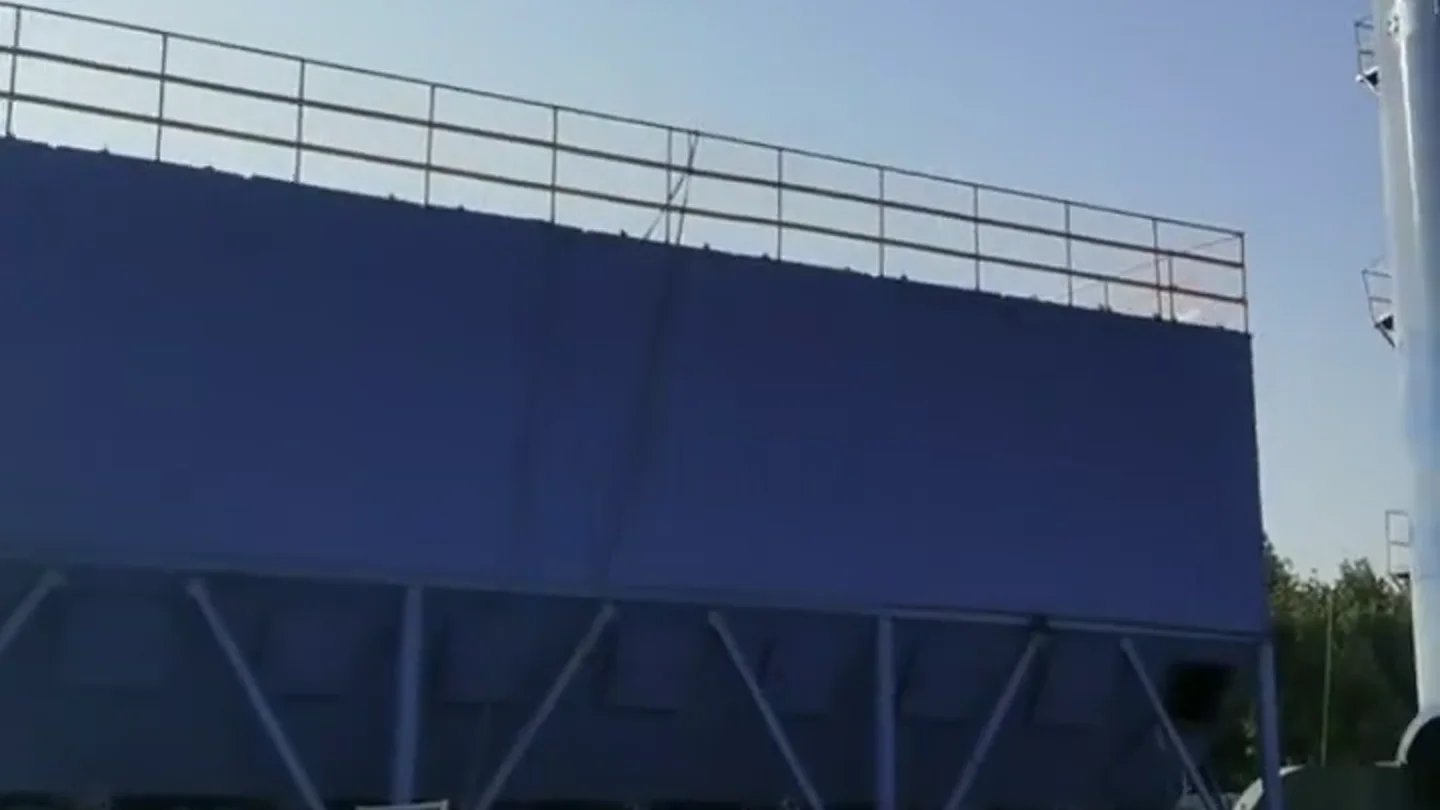
Emission-Control Equipment in a Real Project.
This record shows the dust-collection equipment supplied for an actual biomass boiler project. Final treatment selection depends on fuel and local limits.
FAQ
Biomass dust-control questions.
Is a cyclone enough for a biomass boiler?
It depends on fuel, inlet loading, particle distribution and the required outlet limit. A cyclone may be a pre-separator rather than the complete compliance solution.
Bag filter or wet scrubber—which is better?
Neither is universally better. Bag filters require suitable gas temperature and spark control; wet scrubbers require water, corrosion control and wastewater treatment.
Can you guarantee an emission value?
A guarantee can only be defined against confirmed fuel, gas conditions, measurement method, operating load and local limit in the formal technical proposal.
What data is needed for selection?
Provide the fuel analysis, moisture, boiler load, gas temperature if known, target particulate limit, available space, water condition and ash/wastewater route.
Engineering Proposal
Define the combustion-to-stack system as one scope.
Send the fuel, boiler capacity and local emission requirement. JINHONG will assess the separator, filter or scrubber route together with ducts, fan and residue handling.
Request an Emission-Control Proposal